The USDA lab out of Wooster, Ohio is interested in surveying Indiana sweet corn for virus. They are especially interested in sweet corn near johnsongrass, but other fields are ok too. If you are interested, please let me know or contact Mark Jones, USDA Agronomist,mark.jones@ars.usda.gov, (330) 202-3555 ext. 2837. Your participation would be pretty simple:…Read more about Sweet Corn Virus Survey[Read More]
Corn
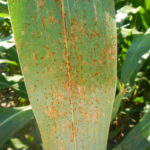
Southern rust of corn is normally a disease of tropical areas. During summer months, however, the fungus which causes southern rust, Puccinia polysora, often moves into southern areas of the U.S. This summer, southern rust has been observed in at least 11 Indiana counties. Symptoms of southern rust include raised structures called pustules. If rubbed…Read more about Southern Rust of Sweet Corn[Read More]
After harvest, storing vegetables in optimal conditions is important to ensure the whole season’s hard work has paid off. This article discusses the optimum storage conditions for tomato, pepper, cucumber, watermelon, cantaloupe and sweet corn. Tomato Ideal storage conditions for tomatoes depend on the maturity stage of picking. If tomatoes are picked at mature green,…Read more about Optimal Storage Conditions for Vegetables[Read More]
Populations of earworms, as evidenced by pheromone trap catches, have not gone to zero as the often due in July. Catches have been fairly low, but moths are still flying and presumably laying eggs. The good news is that in most areas, dent corn is silking, which attracts most of the moths away from our…Read more about Corn Earworms[Read More]
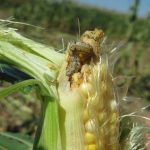
The first generation flight of corn earworm moths continues throughout the state. Heaviest populations as evidenced by pheromone trap catches have been in the northwest. This first generation flight should be ending soon. Then we will likely have a lull in catches for a while (several weeks) until the second generation emerges or we get…Read more about Corn Earworms[Read More]

We are looking for sweet corn growers to participate in our 2017 Vegetable Field Day and Sweet Corn Tasting. Our field day on Aug. 15 at Pinney Purdue Ag Center in Wanatah, will feature tours of tomato production in moveable high tunnels, using both conventional and organic management systems. The event also will include walking tours…Read more about Call for Sweet Corn for Tasting Event[Read More]
Corn earworms are flying. I had 10 in my pheromone trap this morning (June 20). With the surrounding dent corn in most areas far from producing silks, the threshold for spraying silking sweet corn is 1 moth per night, well below what we are catching. So growers who have sweet corn with fresh silks are…Read more about Corn Earworm[Read More]
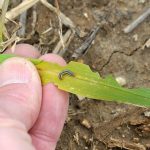
We have had major flights of armyworm moths (Figure 1.), as evidenced by pheromone trap catches. Catches have been highest in the northeastern portion of the state. Armyworms prefer grasses but will feed on other crops if necessary. During outbreak years, the infestation usually will start in pastures or other grassy areas. Once the armyworms…Read more about Armyworms[Read More]
Corn earworm flights are quite variable around the state, but are generally heavy. Counts in pheromone traps are higher in the northern part of the state, with the LaPorte County trap reporting 1422 moths over a 7 day period last week. That’s about 20 X the threshold level. As I wrote in the last newsletter,…Read more about Corn Earworms[Read More]
After a season of relatively low corn earworm activity, pheromone trap catches have taken a dramatic turn upward, especially in the northern half of the state. Catches of 100-200 moths per night in the trap are not uncommon currently. Keep in mind that the threshold for treatment is 10 moths per night, so these catches…Read more about Corn Earworm[Read More]