Corn earworm moth catches continue to be quite low in most areas of the state. Typically, we see an upsurge in activity during the first two weeks of August. With populations as low as they are and most field corn still with attractive silks, sweet corn growers can get by with minimal spray programs now….Read more about Corn Earworm[Read More]
Corn
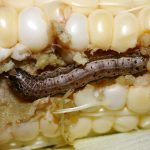
Fall armyworms (Figure 1) are only able to survive the winter in extreme southern US, along the Gulf Coast and in Florida. Fall armyworms tend to migrate northward gradually, with each successive generation moving several hundred miles further north. They reach Indiana every year, but their populations are unpredictable in numbers and location. This week…Read more about Fall Armyworms[Read More]
Pheromone trap catches of corn earworms have been relatively low in most areas of the state, with northern Indiana having the highest counts. Counts from the Purdue research farms can be seen at https://extension.entm.purdue.edu/cornearworm/index.php. Remember that as the field corn surrounding your sweet corn begins to silk and be attractive to the earworm moths for…Read more about Corn Earworm[Read More]
I continue to catch low numbers of corn earworm moths in my pheromone trap. Although the numbers are low, growers with very early sweet corn that is in the reproductive stage should be alert for potential damage. The threshold for spraying sweet corn that matures prior to field corn silking is only one moth per…Read more about Corn Earworm[Read More]
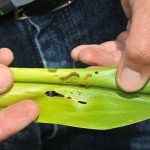
I am continuing to catch a small number of corn earworms in my trap. Usually we talk about earworm moths being attracted to silking corn to lay their eggs. However, moths will lay eggs on whorl stage sweet corn and the larvae can cause damage (Figure 1 and 2). The larvae will often feed inside…Read more about Corn Earworm[Read More]

I caught my first earworm (Figure 1) moth in a pheromone trap last week. Earworms are very polyphagous, meaning they will eat lots of different plants. I suspect that any females that are flying are laying their eggs on wild plants of some sort and not on the seedling stage sweet corn or dent corn that…Read more about Corn Earworm[Read More]
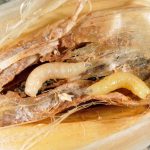
Three species of seed and root maggots attack vegetables in Indiana. The seedcorn maggot (Figure 1) feeds on seeds and seedlings of sweetcorn, cucurbits, lima and snap beans, peas, and other crops. Cabbage maggots can cause serious damage to transplants of cabbage, broccoli, cauliflower, and Brussels sprouts and make the fleshy roots of radishes, turnips,…Read more about Seed and Root Maggots[Read More]
One way insects communicate with individuals of the same species is with pheromones. Pheromones are volatile chemicals released by an insect that usually can be detected only by individuals of the same species. There are a number of different types of pheromones, but the most common type is the sex pheromone. Usually the females will…Read more about Pheromones and Pheromone Traps[Read More]
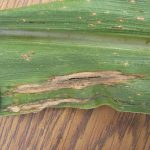
The relatively cool weather Indiana has experienced this summer may be responsible for more observations of northern corn leaf blight (NCLB) on sweet corn than normal. The primary symptom is the cigar shaped lesion that ranges from 1 to 7 inches in length (see Figure 1). The lesions may range from tan to gray in color….Read more about Northern Corn Leaf Blight[Read More]
Catches of corn earworm moths in pheromone traps are gradually increasing. I had 18 in my trap this morning (August 18). The gradual increase is indicative of the local population emerging. We can expect them to continue to gradually increase for most of the remainder of the season. What we have not had is the…Read more about Corn Earworm[Read More]