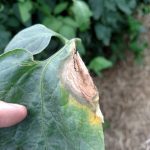
Gray mold of tomato is one of the more common diseases of greenhouse-produced tomatoes. Although it is often a minor problem, if left unchecked, gray mold can cause yield loss. Gray mold, or more properly, Botrytis gray mold, often causes a light gray or brown necrotic lesion on leaves (Figure 1). The lesions on leaves are sometimes…Read more about Botrytis Gray Mold of Tomato[Read More]
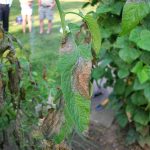
Late blight has been reported on potatoes and tomatoes in LaGrange County.Potato and tomato growers in northern Indiana should follow the management recommendations listed below and in the Midwest Vegetable Production Guide for Commercial Growers 2015 (ID-56). Late blight thrives under cool, wet conditions. The disease can easily spread from plant to plant. Under ideal…Read more about Late Blight in LaGrange County[Read More]
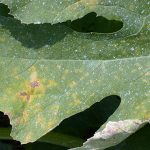
On July 22, I announced that downy mildew had been observed on watermelon in Knox County in southwestern Indiana. This article https://ag.purdue.edu/arp/swpap/VeggieDiseasesBlog/Lists/Posts/Post.aspx?ID=48 describes the outbreak and management options. Below, I will discuss the whereabouts of additional downy mildew outbreaks on cucurbits. Downy mildew has now been reported on cucumber in Knox and La Porte County Indiana….Read more about Downy Mildew Update[Read More]
Pumpkins are off to good start and vines are starting to run, which means it is time to think about making a sidedress application of nitrogen. Typically, I recommend to split nitrogen applications half preplant and half sidedress. This is especially beneficial given all of our rain this season. If you relied on preplant N alone, with…Read more about Mid-Season Nitrogen Management in Pumpkins[Read More]
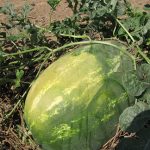
Loss of foliage due to poor growing conditions or disease can cause fruit to be exposed to the sun. Hot temperatures and direct sunlight can lead to areas of the fruit that appear bleached or sunburned. Sunburned fruit may not be marketable. To reduce the probability sunburned fruit, every effort should be made to maintain foliage…Read more about Sunburn on Vegetables[Read More]
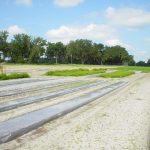
Tomato growers who utilize high tunnels to reach early markets often find that there are few economic alternatives to tomato. Therefore, many growers grow tomatoes after tomatoes instead of rotating to a different crop. The repeated cropping of tomato in the same area can lead to disease problems such as Fusarium crown rot and white…Read more about Soil Solarization[Read More]
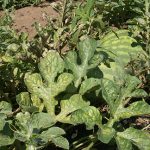
We have received a number of reports of outbreaks of spider mites, primarily in watermelons and in high tunnels. The problems in high tunnels are not unexpected because one of the primary causes of mortality in mite populations is rainfall washing them off the plants and, of course, that is lacking completely in high tunnels….Read more about Spider Mites[Read More]
Pheromone trap catches for corn earworms continue to be very low. Again, this is a time when growers can save a lot of money and time by monitoring their pheromone traps and not spraying. I harvested untreated sweet corn on Friday, July 31, and had over 98% clean ears and the few that were damaged…Read more about Corn Earworm[Read More]
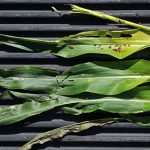
Fall armyworms have completed their annual trek from the Gulf Coast to the Midwest. Fall armyworm larvae will feed on all aboveground parts of the sweet corn plant, during all stages of growth. The damage to the foliage is much more severe than with European corn borer. Larvae will feed from within the whorl of…Read more about Fall Armyworm[Read More]
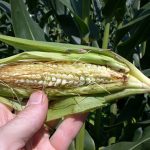
I have seen more green stink bugs this year than at any time in my career. I have no logical explanation for their abundance. It was thought that as the invasive brown marmorated stink bug became established, it might outcompete the native stink bugs such as the green stink bug, causing numbers to decrease. However,…Read more about Green Stink Bug[Read More]
Purdue University prohibits discrimination against any member of the University community on the basis of race, religion, color, sex, age, national origin or ancestry, genetic information, marital status, parental status, sexual orientation, gender identity and expression, disability, or status as a veteran. This material may be available in alternative formats. 1-888-EXT-INFO Disclaimer: Reference to products in this publication is not intended to be an endorsement to the exclusion of others which may have similar uses. Any person using products listed in this publication assumes full responsibility for their use in accordance with current directions of the manufacturer.