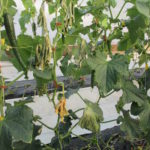
Bacterial wilt is one of the most destructive diseases in high tunnel cucumber production. The reason bacterial wilt is so important is because, like other wilt diseases, it ties up with the entire vascular system of a plant, causing systemic effects (Figure 1). The relatively less important roles that other cucumber diseases play also make[Read More…]
Found 251 Articles
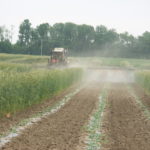
MELCAST is a weather-based disease-forecasting program that helps growers schedule foliar fungicides. MELCAST stands for MELon disease forCASTer. This program, designed by Dr. Rick Latin, Professor of Plant Pathology at Purdue University, keeps track of weather conditions so that cantaloupe and watermelon growers can apply foliar fungicides to their crops when they are most needed.[Read More…]
Entomologists are looking for growers willing to participate in research examining the detection and distribution of striped cucumber beetles. We would like to visit your fields on multiple occasions this year to count the number of cucumber beetles we encounter in your crop. If you grow slicing cucumbers in the field, and are interested in helping to improve[Read More…]
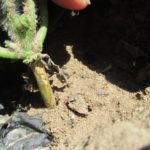
This article provides more detailed information about this herbicide. How does Chateau® herbicide work Chateau® is a group 14 mode-of-action herbicide. Compounds in this group are most active on broadleaf weeds. Before Chateau® became available, no other preemergence herbicide with the same mode of action was labeled for use in watermelons and cantaloupes. The active[Read More…]
Chateau SW® herbicide now has a 24(c) special local needs label for cucurbits. This product is produced by Valent, but the label is held by the Indiana Vegetable Growers Association (IVGA). To obtain a label, one must be a member of the IVGA, pay an annual $100 processing fee, read and understand the ‘conditions for[Read More…]
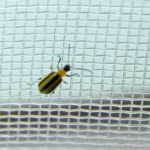
One of the most problematic insect pests that organic vegetable growers have to deal with is the striped cucumber beetle. The insect feeds on all the cucurbit crops, but can be particularly devastating to muskmelons and cucumbers because those two crops are susceptible to bacterial wilt of cucurbits, which is caused by a bacterium carried[Read More…]
Entomologists are looking for growers willing to participate in research examining the detection and distribution of striped cucumber beetles. We would like to visit your fields on multiple occasions this year to count the number of cucumber beetles we encounter in your crop. If you grow slicing cucumbers in the field, and are interested in helping to improve[Read More…]
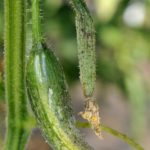
It’s that time of year, where we are prepping high tunnels and getting back into the full swing of production, slowly, here in the Midwest. Many of you have already begun to transplant and may have encountered your first pests on these new crops. Aphids are one that remain a problem in high tunnels, and[Read More…]
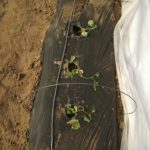
Growers start to plant tomatoes in unheated high tunnels around the end of March in southern Indiana. Around that time, there may still be a few light frosts, or even heavier ones, like the one we just experienced in the past week. With additional help from row covers inside of high tunnels, temperatures normally can[Read More…]
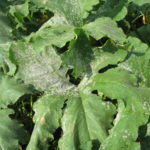
Powdery mildew is a foliar disease of all plants in the cucurbit family. The talc-like symptoms on leaves are relatively easy to identify (Figure 1). More about powdery mildew of cucurbits can be found at this link https://vegcropshotline.org/article/powdery-mildew-of-cucurbits-2/. The remainder of this article is an update. There are several systemic fungicides which are recommended for powdery[Read More…]
It is the policy of the Purdue University that all persons have equal opportunity and access to its educational programs, services, activities, and facilities without regard to race, religion, color, sex, age, national origin or ancestry, marital status, parental status, sexual orientation, disability or status as a veteran. Purdue is an Affirmative Action Institution. This material may be available in alternative formats. 1-888-EXT-INFO Disclaimer: Reference to products in this publication is not intended to be an endorsement to the exclusion of others which may have similar uses. Any person using products listed in this publication assumes full responsibility for their use in accordance with current directions of the manufacturer.