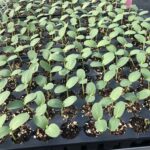
Most of us know a temperature lower than 32°F would kill tender vegetables like tomatoes, peppers, melons, and cucumbers. Home gardeners would wait to plant those crops after the last frost passed, but commercial farmers may take the risk of planting earlier to capture early-season premium prices. Farmers use various strategies, i.e., high tunnels, low…Read more about Check Soil Temperatures Before Planting Cold Sensitive Crops[Read More]
Cool Temperature
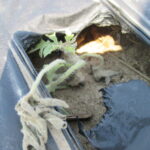
In early May, we had an extended cold period with daily average air temperatures in the 50s°F. Min temperatures are in the 40s°F, some nights even upper 30s°F. In most areas in southern Indiana, it is fortunate we did not encounter a frost with temperature dropped below 32°F, but the low temperature for the extended…Read more about Why do Watermelon and Melon Plants Wilt?[Read More]
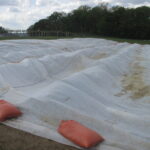
Last week when the heavy frost hit us, air temperature at Southwest Purdue Ag Center (SWPAC) in Vincennes, IN dropped to 24°F. We did not take action for frost protection on the strawberries growing with the annual plasticulture system, considering only two early cultivars start to bloom at that time. However, this appears to be…Read more about Strawberry Frost Protection[Read More]
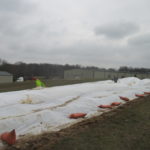
Strawberries growing in the matted-row system are in the blooming stage. Open flowers cannot tolerate temperatures lower than 30°F (Figure 1). Strawberry growers should be prepared for the coming low temperatures this week. Row covers (Figure 2) can be effective in protecting strawberry flowers. In our earlier trial, 1.5 oz/sq row covers provided 4-6 degrees…Read more about Using Row Cover or Sprinkler Irrigation for Cold Protection of Strawberries[Read More]
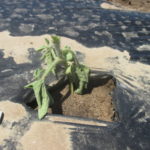
This is a newly released video about when to plant watermelons. https://youtu.be/tHT2mAnNRWk Watermelon, cantaloupe, cucumber plants are very sensitive to low temperatures. Even when frost has passed, soil temperatures below 60°F can result in transplant establishment failure. Check soil temperatures before planting. The rule of thumb is to plant watermelon, cantaloupe and cucumber transplants when…Read more about When to Plant Watermelons[Read More]
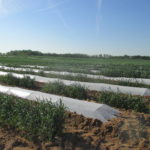
Two types of injury on young warm-season vegetable plants are caused by low temperatures: frost/freezing injury and chilling injury. Frost/freezing injury occurs when temperatures drop below 32°F. Ice formation in plant tissue cuts cell membranes. When the tissue thaws, the damage results in fluids leaking from the cell, causing water soaked damage. Frost/freezing injury is…Read more about Protect Early Planted Warm-Season Vegetables from Low Temperatures[Read More]
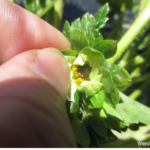
Spring weather is unpredictable. One of the major risks associated with strawberry production is cold damage in the spring. Open strawberry flowers can not tolerate temperatures lower than 30°F, popcorn stage flowers and tight buds may tolerant temperatures low to 26 and 22°F, respectively. If strawberries are in the early blooming stage, the damage might…Read more about Strawberry Cold Protection Made a Difference[Read More]
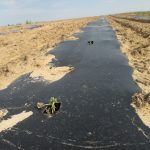
In the past week, we have observed a few cases where newly planted watermelon seedlings were severely damaged or dead (Figure 1). In some fields, we observed rotted roots and lower stems caused by fungal pathogens. However, such diseases were in response to the cold soils and would not normally cause problems in warm soils….Read more about Low Temperature Caused Watermelon Establishment Failure[Read More]
Two types of injury on young warm-season vegetable plants are caused by low temperatures: frost/freezing injury and chilling injury. Frost/freezing injury occurs when temperatures drop below 32°F. Ice formation in plant tissues cut cell membranes. When the tissue thaws, the damage results in fluids leaking from the cell, causing water soaked damage. Frost/freezing injury is…Read more about Protect Early Planted Warm-Season Vegetables from Low Temperatures[Read More]
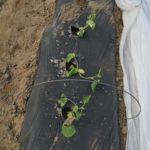
Chilling injury occurs when temperatures are above 32°F and below 55°F. The plant tissue becomes weakened that leads to cellular dysfunction. The most noticeable visual symptom of chilling injury is leaf and hypocotyl wilt (Figure 1). This is caused by the rapid decline in the ability of roots to absorb and transport water. It also…Read more about Chilling Injury on Young Warm-season Vegetable Plants[Read More]