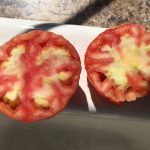
For tomato growers, managing potassium (K) nutrition is critical for both yield and fruit quality. While most producers understand K’s importance, many don’t realize how significantly temperature influences a plant’s ability to uptake and utilize this essential nutrient. With increasing heat extremes, understanding this relationship becomes even more crucial for successful production. The Temperature-Potassium Connection…Read more about Temperature Effects on Potassium Uptake: Managing Heat Stress for Better Tomato Quality[Read More]
Plant Nutrition
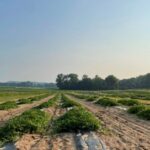
A large proportion of watermelon acres in Indiana are not currently using drip irrigation. Farmers may choose not to use drip irrigation because precipitation is usually abundant in most years for watermelon production. There is a desire to reduce costs and/or fear that over-irrigation may increase the risk of mature watermelon vine decline, a disease…Read more about Research Update on Nitrogen Management in Non-Irrigated Watermelon Production[Read More]
Fertilizer prices have increased dramatically this year. More than ever, we need to think carefully about whether we are using fertilizers wisely. This article will be one of a series to help vegetable growers reevaluate their fertilizer use strategies. One of the lessons I learned in Plant Nutrition class in graduate school was the 4Rs…Read more about Reevaluation of Fertilizer Application Practices[Read More]
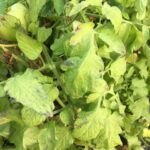
After the heavy rains in the past a few days, flooding/waterlogging injury stands out in my farm visit this week. Regardless of tomato or cucumber, the injured plants showed leaf yellowing that occurred 2 to 3 days after waterlogging (Figure 1). The yellowing leaves are a result of chlorophyll loss, which is associated with N…Read more about Plants Recovering from Waterlogging Damage[Read More]
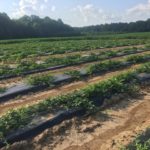
Thanks to growers’ collaboration and help from Superior Ag, we collected plant tissue samples from 12 watermelon fields at different crop growing stages in Southern Indiana in the 2020 season. In a previous article, we discussed results about magnesium and potassium. In this article, we will discuss another nutrient, Sulfur (S). Sulfur deficiency has become…Read more about Survey of Watermelon Nutritional Status in Southern Indiana – Sulfur[Read More]
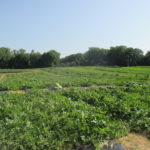
Thanks to growers’ collaboration and help from Superior Ag, we collected plant tissue samples from 12 watermelon fields at different crop growing stages in Southern Indiana in the 2020 season. In this article, I want to discuss two of the issues that standout from these tests. One is the generally low or deficient Magnesium (Mg)…Read more about Survey of Watermelon Nutritional Status in Southern Indiana — Magnesium and Potassium[Read More]
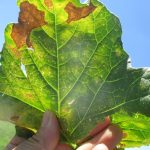
Manganese (Mn) toxicity was observed in a cantaloupe field at the Southwest Purdue Agricultural Center this year. This is a plant nutritional disorder related to acid soils and it usually occurs in clusters in a field. A plant tissue test confirmed that the Mn level in the leaves of the affected plants was 3766 ppm,…Read more about Manganese Toxicity on Cantaloupe Observed Again[Read More]
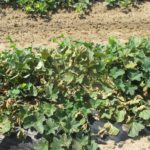
Manganese toxicity is a common problem for cantaloupes growing in sandy soils across southwestern Indiana. Because symptom of manganese toxicity can easily be confused with foliar diseases, growers may misdiagnose the problem and waste fungicides by spraying for nonexistent diseases. As we now know that manganese toxicity is a nutrient related disorder caused by low…Read more about Manganese Toxicity on Cantaloupes[Read More]
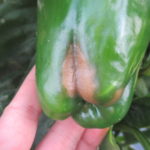
In the past few weeks, we have received several reports about blossom end rot on tomatoes and peppers as the crops start to set fruit. Blossom end rot is a physiological disorder (not an infectious disease) that commonly occurs on tomatoes and peppers. Initial symptoms of the physiological disorder include dark green or brown water-soaked leisure…Read more about Blossom End Rot of Tomato and Pepper[Read More]