Yellowstriped armyworms continue to cause problems for tomato growers, especially in high tunnels. The populations are often spotty within a field or high tunnel, but can easily reach damaging levels. Most of the insecticides listed in the Midwest Vegetable Production Guide for control of caterpillars on fruiting vegetables (pages 135-6) will control yellowstriped armyworms. If…Read more about Yellowstriped Armyworm[Read More]
Protected Culture and Season Extension
A field day will be held on July 9 to share with the public the various research activities at the Southwest Purdue Agricultural Center in Vincennes, IN. The day will start at 7:30 A.M. with a health fair. Registration starts at 8:30 A.M. Presentation topics include: managing cucumber beetles while protecting bees, production of vegetables…Read more about Southwest Purdue Agricultural Center Field Day[Read More]
Blossom end rot of tomato has been showing up in some protected growing structures. This article reviews the disorder and summarizes preventive practices. Blossom end rot is a physiological disorder caused by a deficient supply of calcium to the developing fruit. It is a common problem on tomatoes, but can also occur on peppers, eggplants,…Read more about Blossom End Rot of Tomato[Read More]
A field day will be held on July 9 to share with the public the various research activities at the Southwest Purdue Agricultural Center in Vincennes, IN. The day will start at 7:30 A.M. with a health fair. Registration starts at 8:30 A.M. Presentation topics include: managing cucumber beetles while protecting bees, production of vegetables…Read more about Southwest Purdue Agricultural Center Field Day[Read More]

In March 2015 the Department of Horticulture and Landscape Architecture appointed Dr. Petrus Langenhoven as Horticulture and Hydroponics Crop Specialist. During the past 18 years Dr. Petrus Langenhoven has dedicated his career to the development of the horticulture sector in Sub-Saharan Africa. His career started off at the Agricultural Research Council in Stellenbosch, South Africa….Read more about Exciting Future for Horticulture in Indiana[Read More]
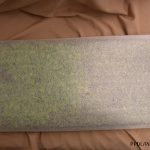
Samples in plug trays, as well as unrooted and rooted cuttings, and plants in pots require extra care when they are packaged for submittal to a diagnostic lab. Before you mail the next sample, please take a few minutes to review these suggestions for packaging and submitting samples. This will help preserve the integrity of…Read more about Tips for Submitting Greenhouse Samples to the Purdue Plant and Pest Diagnostic Lab[Read More]
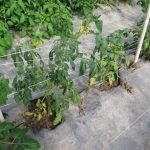
Symptoms of this disease include tomato plants with lower leaves that become yellow (chlorotic) and die; plants that begin to wilt; a lesion on the lower stem at ground level (Figures 1 and 2). If tomato plants are removed from the soil and carefully split open from the ground level, a discoloration of the vascular tissue…Read more about Fusarium Crown and Root Rot of Tomato[Read More]
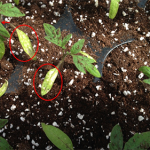
This is the time of year when growers often call to complain about tomato transplants that do not look right. One possibility is that the seedlings suffer from heater problems. In particular, tomato plants are very susceptible to damage from the gas ethylene. In Figure 1, some of the seedlings have leaves that are curled down and stems that are twisted (epinasty in…Read more about Ethylene Damage on Tomato[Read More]
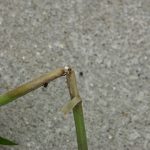
In early March, I observed white mold of recently transplanted tomato plants in a greenhouse situation. I have described the symptoms, biology and management of white mold at https://ag.purdue.edu/arp/swpap/VeggieDiseasesBlog/Lists/Posts/Post.aspx?ID=18 . I have never observed white mold (a.k.a, timber rot) in February before. I have observed white mold of tomato transplants in April. However, the very…Read more about White Mold of Tomatoes Observed in Greenhouse[Read More]