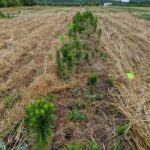
Attendees at a July field day at the Meigs Horticulture Research Farm in Lafayette, Indiana saw first-hand the potential of cover crops to suppress weeds in a SARE-funded demonstration plot. First, some background: Three cover crop species were sown with a ten-foot drill on September 10, 2021: Oats at 100 lb/acre Cereal rye at 65…Read more about Cover Crop Demonstration Plots Show Weed Suppression Potential[Read More]
Weed Management
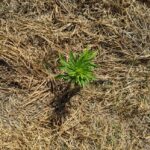
Try as we might, it seems that no weed management program controls 100% of the weeds in a field. Inadequate or excessive rainfall can limit the success of preemergence herbicides. Less-than-ideal soil moisture can result in unsatisfactory in-season cultivation. Even when we have effective herbicide options, late emerging weeds often cannot be treated within the…Read more about Going Rogue[Read More]

Grass-selective herbicides are valuable to weed management in broadleaf vegetable crops. As harvest season draws closer, it is important to note that not all grass herbicides have the same pre-harvest interval (PHI) requirements. The two most commonly used grass-selective herbicides are clethodim and sethoxydim. While most PHI’s are similar between the two (Table 1), there…Read more about Keeping an Eye on Grass Herbicide PHI (Pre-Harvest Interval)[Read More]
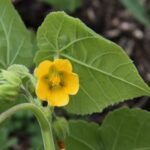
Velvetleaf (Abutilon theophrasti) – Mallow Family Synonyms: pie marker, buttonweed, Indian mallow, butter print, velvet weed, butter-weed, Indian hemp, cotton-weed, and wild cotton. Identification and General Description Summer annual that grows 3 to 8 feet tall. Heart-shaped leaves and stems are covered with short, soft hairs giving it a velvety feel. Young leaves and stems…Read more about Weed Spotlight[Read More]

As of March 29, 2022, Reflex herbicide is registered for use on select vegetables in the state of Indiana through an indemnified 24(c) special local needs label. Below we discuss what this means for Indiana vegetable producers and how to access the new label. What crops are included?: Pea (succulent) Bell and non-bell pepper (transplanted)…Read more about Reflex Herbicide Now Registered for Use in Select Indiana Vegetables[Read More]

If you use the herbicides Valor® or Chateau®, you may notice a change with your next jug. Valent U.S.A. Corporation is phasing out production of Valor SX® and Chateau SW®, both water soluble granule formulations. The new liquid formulations are called Valor EZ® and Chateau EZ®. While the granular formations contain 51% of the active…Read more about EZ (liquid) Formulations Set to Replace Granular Valor SX and Chateau SW[Read More]

A special project group of the North Central Integrated Pest Management (IPM) Center wants to learn about your concerns and experiences with herbicide drift. The group is surveying growers of fruits, vegetables, and other specialty crops in the upper Midwest. To truly understand the frequency, severity, and economic impact of herbicide drift on specialty crops,…Read more about Grower Survey to Assess Herbicide Drift Damage in the North Central U.S.[Read More]
Pyridate herbicide was once a cornerstone of broadleaf weed control in mint before its market withdrawal. Recently the use of pyridate (Tough® 5EC) was limited to emergency exemption use, also known as a Section 18 label, which had to be requested and approved annually. However, a new Tough® 5EC label was approved by the EPA…Read more about Tough® 5EC Herbicide Now Registered in Indiana with a Section 3 Label[Read More]
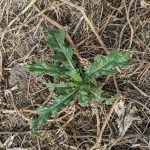
The vegetable crops have all been harvested and it’s time to just relax, right? Maybe. However, the decisions you make this fall will influence your weed control next spring. In all likelihood, you did not control EVERY weed during the growing season. Inevitably, there were weeds that escaped control. If so, these weeds have already…Read more about Post-harvest Weed Management[Read More]
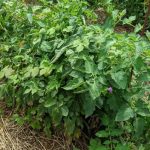
Genus: Ipomoea sp. Species: Ivyleaf: Ipomoea hederacea Entireleaf: Ipomoea hederacea integriuscula Tall: Ipomoea purpurea Pitted: Ipomoea lacunosa Morning glories are among the most troublesome weeds in many cropping systems in the Midwest. They are difficult to control due to their fast growth, large seed size, and impenetrable seed coat. Morning glories get their name because…Read more about Morningglories[Read More]