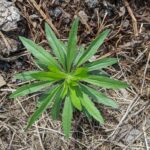
Scientific names: Erigeron canadensis or Conyza canadensis Horseweed, also known as marestail, fleabane, or colt’s tail, is a common and troublesome weed throughout North America due to its high seed production, wind dissemination, lack of seed dormancy, and adaptability to dry and moist soil. Moreover, horseweed populations have shown to be resistant to Group 2…Read more about Horseweed[Read More]
Weed Management
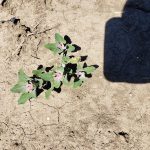
Scientific name: Chenopodium album Common lambsquarters is originally from Eurasia. It is an aggressive weed, adapted to grow vigorously in many different climates and soils, and has been able to establish worldwide. In North America it was once grown as a vegetable crop. In Asia and Africa, it is still cultivated to use as a…Read more about Common Lambsquarters[Read More]
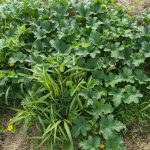
If they have not already, your early season residual herbicides will soon run out of steam. Depending on the crop and production system, you may soon lose the ability to cultivate row middles. Now what? For many vegetable crops, managing emerged weeds is difficult with few postemergence herbicide options. This article will focus on cucurbit…Read more about Considerations for Mid-Season Weed Control in Cucurbits[Read More]
Dicamba has been in the headlines the last two weeks. In case you’ve missed it, here are the highlights: On June 3 the United States Court of Appeals for the Ninth Circuit ruled against the Environmental Protection Agency and its 2018 registration of over-the-top dicamba products Xtend, Engenia, and FeXapan and vacated their registrations. The…Read more about Dicamba Herbicide Updates and New Resources[Read More]
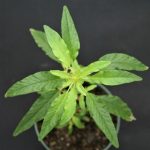
Waterhemp is prevalent in the Midwest and the Great Plain States. It became a significant agricultural weed in 1990s. Before then it was present in crop fields, but it is presumed that it rarely reached economic infestations. It became a problem in Indiana by 1998. Waterhemp is best adapted where less aggressive tillage is practiced….Read more about Waterhemp[Read More]
Dual Magnum® is registered for use in numerous row crops and specialty crops in the state of Indiana. While some vegetable crops (beans, peas, potatoes, pumpkins, rhubarb, and tomatoes) appear on the specimen or national label (Section 3 label), most do not. Numerous specialty crops that do not appear on the specimen label are included…Read more about Instructions on Finding the 24(c) Dual Magnum® Herbicide Label[Read More]
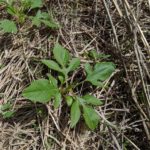
Scientific name: Ambrosia trifida Giant ragweed is a weed member of the sunflower family (Asteraceae) and native to the United States. It is extremely competitive and difficult to control in broadleaf crops. It emerges as early as March and continues to germinate through spring and early summer. Controlling giant ragweed during summer is not only…Read more about Giant Ragweed[Read More]
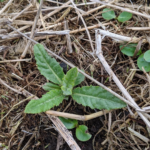
Spring is here and with it comes the emergence of weeds- especially problematic perennials like Canada thistle (Figure 1). Below is some information about Canada thistle and methods to manage it. Keep in mind two things: 1) many of these strategies will work for other perennial weeds, and 2) management of perennial weeds often requires…Read more about Canada thistle[Read More]

In the October 2019 issue of the Vegetable Crops Hotline, I referenced the new regulatory changes to herbicides containing the active ingredient paraquat. One of the new requirements is for closed system packaging. To quote the Environmental Protection Agency (EPA): “New closed-system packaging (is) designed to prevent transfer or removal of the pesticide except directly…Read more about A Look at the New Closed Transfer System for Paraquat-Containing Herbicides[Read More]
As the production season winds down there are two weed-related news items that producers should be aware of: New Requirements for Users of Paraquat Herbicide. Paraquat dichloride is the active ingredient in products such as Gramoxone®, Devour®, Cyclone®, and Quik-Quat®. Earlier this year the Environmental Protection Agency (EPA) announced the following changes to paraquat requirements:…Read more about Weed Science Updates[Read More]