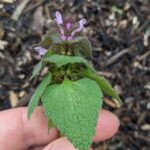
Common Names Purple deadnettle, red deadnettle. Latin name Lamium purpureum. “Lamium” is derived from the Latin for “throat,” referencing the flower tube’s elongated shape. “purpureum”, also derived from the Latin, means “purple”. Family Lamiaceae – “the mint family”. Life cycle In Indiana, purple deadnettle is a winter annual. Plants emerge as small seedlings in the…Read more about Weed Spotlight: Purple Deadnettle[Read More]
Weed Management
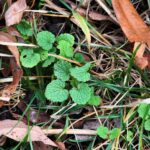
Common names: Henbit, henbit dead nettle, henbit nettle, blind nettle, bee nettle, and giraffe head. Latin name: Lamium amplexicaule. “Lamium” is derived from the Latin for “throat,” referencing the flower tube’s elongated shape. “amplexicaule”, also derived from the Latin, means “embracing the stem,” describing the upper leaves of henbit that encircle the stem. Family: Lamiaceae…Read more about Weed Spotlight: Henbit[Read More]
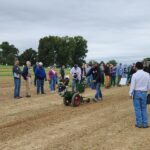
September 25th began cloudy and gray, with a hint of autumn in the air and the bustle of field day preparation on Ohio State’s Wooster campus. The Midwest Mechanical Weed Control Field Day, an annual event by The Land Connection, partnered with Ohio State this year to bring mechanical weed control demonstrations to northeast Ohio….Read more about See Weeds Perish Up Close and In Person at the Midwest Mechanical Weed Control Field Day![Read More]
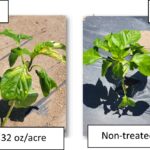
Command® 3ME herbicide recently received a 24C Special Local Need label for use in banana peppers in the state of Indiana (Figure 1). Prior to this registration, Command® 3ME could be applied in the production of other types of bell and non-bell peppers, but not banana peppers. Field research results by the Horticulture Crops Weed…Read more about Command 3ME Now Registered for Use in Banana Peppers in Indiana[Read More]
Midwest Mechanical Weed Control Field Day returns Wednesday, September 27, 2023, to OSU Wooster Campus in Wooster, OH. WHAT TO EXPECT In-field demonstrations of cultivation tools for vegetables and row crops Demonstrations of implements on both four-wheel and two-wheel tractors Expo featuring industry-leading cultivation companies and cutting-edge tools Conversations with international cultivation experts …and more! The field day connects farmers,…Read more about Mechanical Weed Control Field Day[Read More]
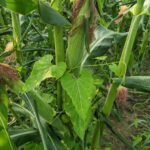
What is it? Honeyvine milkweed (Cynachum laeve) is a perennial, deciduous, vining member of the milkweed family Asclepiadaceae. It is native to the United States and can serve as a host for monarch butterfly larvae. Honeyvine milkweed tends to be more problematic in production systems with reduced or no tillage, including perennial fruits. It can…Read more about Honeyvine Milkweed[Read More]
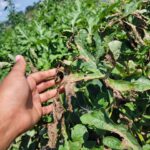
Earlier this year, Rely® 280 was registered for use in transplanted cantaloupe, cucumber, pepper, summer squash, tomato, and watermelon with a supplemental label. The registration allows for the use of Rely® 280 for pre-plant burndown and post-directed applications to row middles. Previously, postemergence burndown and row middle options were limited to glyphosate (Roundup®), carfentrazone (Aim®),…Read more about Rely® 280 Added to Row Middle Weed Control Arsenal in Select Crops[Read More]

The most recent two podcast episodes of the Strawberry Chat focus on spring weed and disease management. Spring Weed Management Podcast Kevin Schooley and Stephen Meyers joined the discussion to talk about weeds and weed management in matted-row and plasticulture strawberry production. Steve spoke about weeds commonly seen in strawberry fields and gave us a…Read more about Strawberry Podcasts on Spring Weed and Disease Management[Read More]
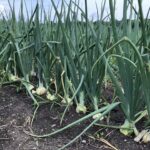
Onions are poor competitors with weeds. Their narrow leaves do not compete well for light, and their shallow root system makes them poor competitors for water. Tight in-row and between-row plant spacing make mechanical weed control, including hand-weeding, difficult. Chemical weed control can be effective and reduce the amount of time required to hand-weed onions….Read more about Even Minimal Herbicide Use Can Reduce Hand-Weeding Time[Read More]

This questionnaire is part of a USDA Specialty Crop Research Initiative (SCRI)-funded proposal (DEVELOPING A NATIONAL TEAM TO OPTIMIZE NON-HERBICIDE WEED MANAGEMENT TECHNIQUES IN COLE AND LEAFY GREEN CROPS) to identify grower interest in novel technology for weed management. Novel technology includes vision-guided sprayers/thinners, steam weeding, and precision mechanical, laser, and electric weeders. It may…Read more about New Questionnaire to Identify Grower Interest in Novel Weed Management Technology[Read More]