We are going to continue the study of evaluating grafted cucumbers for early season production in greenhouses and high tunnels by collaborating with farmers. You will find what we have learned through the process in the previous article. The same as last year, we are going to supply grafted and normal cucumber plants for free….Read more about Are You Interested in Participating in a Grafted Cucumber Study?[Read More]
Found 1707 Articles
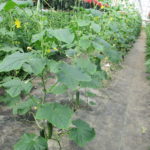
Cucumbers are extremely sensitive to cold. Locally grown cucumbers are almost only available in the summer. While in Asia, without the use of fancy heated greenhouses, cucumbers can grow all winter. Growing grafted cucumbers with cold tolerant squash rootstock is one of the key factors making this possible. Since 2016, we started to evaluate opportunities…Read more about Growing Grafted Cucumbers for Early Season Production in Protected Cultural Systems — Lessons Learned from on-farm Trials[Read More]
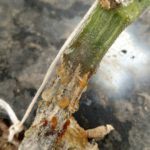
This disease was identified on a long Asian cucumber growing in a high tunnel in Mid-June in Knox County. The first symptom noted was wilting of the cucumber plant. Upon closer examination, a light, gray necrosis was observed on the lower portion of the plant. In Figure 1, you may notice dark spots in the…Read more about New Disease Report – Charcoal Rot of Cucumber[Read More]
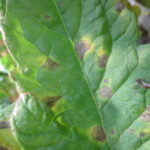
The following two articles describe two vegetable diseases new to Indiana that were recorded this past season. While neither of the disease reports are from severe outbreaks, it might be a good idea to become familiar with what may become a new disease situation. Target spot of tomato was identified from a tomato plant growing in…Read more about New Disease Report – Target Spot of Tomato[Read More]
This is the final issue of the Vegetable Crops Hotline (VCH) for 2018. Subscribers who receive a paper copy in the mail need to renew. A renewal form is included with this issue. We are providing up-to a three years’ subscription of VCH at a reduced price (1 year for $15, 2 years for $25, and 3…Read more about Time to Renew[Read More]
Farmer Rancher Program These grants are for farmers/ranchers to explore innovative sustainable agriculture solutions to production, marketing, labor, and other problems. There are three types of competitive grants: individual grants ($9,000 maximum), Team of Two grants for two farmers/ranchers from separate and distinct operations who are working together ($18,000 maximum), and Group grants for three…Read more about The 2019 North Central Region – Sustainable Agriculture Research & Education Grant Opportunities[Read More]
Purdue Extension will be hosting a three-day PrimusGFS v3.0 Training at the Southwest Purdue Agricultural Center on December 5, 6, and 7. This training will provide basic information for those who anticipate using the PrimusGFS v3.0 system or will be transitioning from previous versions. Each day will cover a specific portion of the new version 3.0…Read more about Save the Date! Extension to Host PrimusGFS v3.0 Training[Read More]

With the start of pumpkin harvest, it is a good time to review important considerations for harvest and postharvest storage of pumpkins and winter squash (butternut, acorn and hubbard squash etc.). Pumpkin and winter squash should be harvested fully mature to reach their optimal quality and fulfill their potential for long shelf lives. Characters indicating…Read more about Harvest and Postharvest Storage of Pumpkins and Winter Squash[Read More]
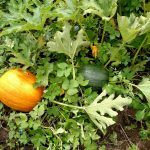
Several pumpkin growers have asked me when to stop managing for pumpkin diseases. That is, when should a pumpkin grower stop applying fungicides? I cannot provide a definitive answer for this question; every grower will have to make his or her own decision. Below, however, are some factors to consider. Estimate the crop yield-walk through the field and…Read more about Late Season Pumpkin Disease Management[Read More]

Produce Safety Alliance Grower Training Date: September 28, 2018, 9:00 am – 5:00 pm (EST) Location: Southwest Purdue Agriculture Center, 4369 N. Purdue Rd., Vincennes, IN Purdue Extension will be hosting a Produce Safety Alliance (PSA) Grower Training on September 28th. The training will be held in the basement of the SWPAP building at the…Read more about Upcoming Events[Read More]
Purdue University prohibits discrimination against any member of the University community on the basis of race, religion, color, sex, age, national origin or ancestry, genetic information, marital status, parental status, sexual orientation, gender identity and expression, disability, or status as a veteran. This material may be available in alternative formats. 1-888-EXT-INFO Disclaimer: Reference to products in this publication is not intended to be an endorsement to the exclusion of others which may have similar uses. Any person using products listed in this publication assumes full responsibility for their use in accordance with current directions of the manufacturer.