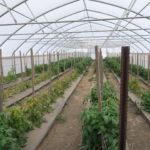
This disease was recently observed in a tomato greenhouse. This article will review tomato spotted wilt virus symptoms, biology and management. Tomato spotted wilt virus (TSWV) and the closely related Impatiens necrotic spot virus (INSV) are usually observed in greenhouse or high tunnel situations. Both TSWV and INSV affect many hosts, including vegetables and flowering…Read more about Tomato Spotted Wilt Virus[Read More]
Found 1707 Articles
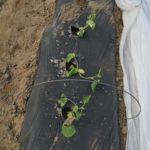
Chilling injury occurs when temperatures are above 32°F and below 55°F. The plant tissue becomes weakened that leads to cellular dysfunction. The most noticeable visual symptom of chilling injury is leaf and hypocotyl wilt (Figure 1). This is caused by the rapid decline in the ability of roots to absorb and transport water. It also…Read more about Chilling Injury on Young Warm-season Vegetable Plants[Read More]
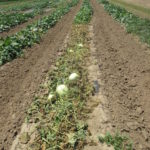
Bacterial wilt is a serious pest of cucumbers and melons. This disease is caused by the bacterium, Erwinia tracheiphila. However, it is spread by the striped or spotted cucumber beetle. Most management schemes have concentrated on controlling the cucumber beetle in order to lessen the severity of bacterial wilt. Currently, management of bacterial wilt often…Read more about Susceptibility of Melon Varieties to Bacterial Wilt[Read More]

Dual Magnum® has had a special local needs (24C) label in Indiana for use on transplanted bell peppers and other vegetables for a number of years. Last week the label was amended to include additional small fruit and vegetable crops, including asparagus. The new 24C label is available on the National Pesticide Information Retrieval System…Read more about Dual Magnum Indiana 24C Label Amended to Include More Crops[Read More]
Inspections of produce farms for compliance with the Food Safety Modernization Act Produce Safety Rule (PSR) are set to begin in July 2019. Passage of SB 331 in the Indiana General Assembly in 2018 gave the Indiana State Department of Health (ISDH) PSR enforcement authority in Indiana, making them the lead agency for inspections. SB…Read more about FSMA Produce Safety Rule Inspections Will Begin in 2019[Read More]

March has been welcoming Indiana like a lion with below-normal temperatures and a combination of above and below normal precipitation (see figure). Snowfall accumulated across the state ranging from less than 1” in the southwest and northwest to as much as 3-4” in the southeast part of Indiana. This precipitation has caused drought to be…Read more about Indiana Climate and Weather Report[Read More]
Midwest Vegetable Production Guide for Commercial Growers 2019 update-The on-line version of this guide has been updated. See below and update your hard copy. Page Comment 1 Add “Anthony Hanson, IPM program” under contributors, University of Minnesota 117 Under powdery mildew, last sentence in disease notes-“Protect pumpkin vines until approximately 21 days from last harvest.”…Read more about Midwest Vegetable Production Guide for Commercial Growers 2019 Update[Read More]

Chateau SW® herbicide now has a 24(c) special local needs label for cucurbits. This product is produced by Valent, but the label is held by the Indiana Vegetable Growers Association (IVGA). To obtain a label, one must be a member of the IVGA, pay an annual $100 processing fee, read and understand the ‘conditions for…Read more about Chateau Herbicide SW 24(c) label[Read More]
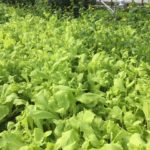
Bolting of crops overwintered in high tunnels is common in the spring. ‘Bolting’ refers to lengthening and blooming of the flowering stalk. Bolting is often a problem because the quality of the marketable part of the plant declines. Also, plants subject to bolting are programmed to die once they complete flowering and seed production so…Read more about Bolting and Blooming in High Tunnels[Read More]
Purdue University prohibits discrimination against any member of the University community on the basis of race, religion, color, sex, age, national origin or ancestry, genetic information, marital status, parental status, sexual orientation, gender identity and expression, disability, or status as a veteran. This material may be available in alternative formats. 1-888-EXT-INFO Disclaimer: Reference to products in this publication is not intended to be an endorsement to the exclusion of others which may have similar uses. Any person using products listed in this publication assumes full responsibility for their use in accordance with current directions of the manufacturer.