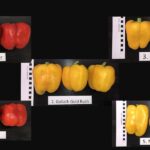
There is still time to select sweet pepper varieties for this summer. During the 2020 growing season, I evaluated a new batch of five sweet bell pepper varieties. I also evaluated five sweet tapered pepper varieties for a second season. All varieties (Table 1, Figures 1 & 2) were grown in a high tunnel at…Read more about Have You Selected Your Sweet Pepper Varieties Yet?[Read More]
Found 1707 Articles
This evening’s schedule calls for applying fungicides to your watermelon. Everything is ready for the application, but now you aren’t sure. The weather report forecasts rain tomorrow. Will the rain tomorrow wash off the fungicide application? Should you wait to apply the fungicide until after it rains? This question or similar questions are among the…Read more about Fungicide Applications During Rainy Weather[Read More]
As vegetable growers get ready for the 2021 season, one question might be to find up-to-date information about fungicides and how to apply them. Some possible resources are listed below. The Midwest Vegetable Production Guide for Commercial Growers offers recommendations for fungicides and other pesticides and practices that have been updated for the 2021 season….Read more about Fungicide Information for 2021[Read More]
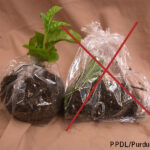
The Purdue University Plant and Pest Diagnostic Laboratory (PPDL) specializes in the identification of plant diseases, insects and plants, as well as in the diagnosis of plant-health related problems. The PPDL is a partner in the national Plant Diagnostic Network (http://www.npdn.org), a national consortium of diagnostic laboratories dedicated to enhancing the work of diagnostic labs…Read more about The Purdue Plant and Pest Diagnostic Lab – Ready to Serve You[Read More]
As vegetable growers get ready for the 2021 season, it might be a good idea to keep the list below handy. Most of the names one would need to contact during the season are listed along with their contact information. Tamara Benjamin – Farm Planning (765) 496-1930 tamara17@purdue.edu Amanda Deering – Food Safety (765) 494-0512…Read more about Purdue Specialists[Read More]

Date: Mar. 12, 2021 Time: 9:00am-noon EST Location: Virtual, connection information will be sent 3 days prior to the event. There is no cost for this program unless you need PARP/CCH credits. To receive PARP/CCH credits you must register and pay by Mar. 5th, at https://www.cvent.com/d/tjq1sp. PARP participants must attend all sessions between 9:55-11:55am to receive credit. CCH participants…Read more about Southwest Indiana Melon and Vegetable Growers Annual Meeting[Read More]

A special project group of the North Central Integrated Pest Management (IPM) Center wants to learn about your concerns and experiences with herbicide drift. The group is surveying growers of fruits, vegetables, and other specialty crops in the upper Midwest. To truly understand the frequency, severity, and economic impact of herbicide drift on specialty crops,…Read more about Grower Survey to Assess Herbicide Drift Damage in the North Central U.S.[Read More]

Date: Mar. 12, 2021 Time: 9:00am-noon EST Location: Virtual, connection information will be sent 3 days prior to the event. There is no cost for this program unless you need PARP/CCH credits. To receive PARP/CCH credits you must register and pay by Mar. 5th, at https://www.cvent.com/d/tjq1sp. PARP participants must attend all sessions between 9:55-11:55am to receive credit. CCH participants…Read more about Southwest Indiana Melon and Vegetable Growers Annual Meeting[Read More]
Midwest Vegetable Trial Reports provide yield and quality data based on field test results under different cropping conditions. Reports based on projects in 2020 include variety trial results for asparagus, peppers – bell, specialty, and chile, cantaloupe, pickling cucumber, summer squash, and seedless watermelon. Cultural practice trials include no-till sweet corn and pumpkin after winter…Read more about Midwest Vegetable Trial Reports Update[Read More]
This questionnaire is part of a study led by Indiana University and the Indiana State Department of Agriculture to learn from Indiana’s nut growers and nut buyers to support value chains around nuts grown in Indiana. It takes a quick 7 minutes. Indiana Nut Buyers Questionnaire (qualtrics.com)
Purdue University prohibits discrimination against any member of the University community on the basis of race, religion, color, sex, age, national origin or ancestry, genetic information, marital status, parental status, sexual orientation, gender identity and expression, disability, or status as a veteran. This material may be available in alternative formats. 1-888-EXT-INFO Disclaimer: Reference to products in this publication is not intended to be an endorsement to the exclusion of others which may have similar uses. Any person using products listed in this publication assumes full responsibility for their use in accordance with current directions of the manufacturer.