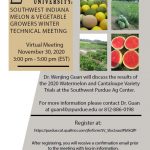
The Annual Fall/Winter Meeting of the Southwest Indiana Melon and Vegetable Growers is scheduled on Monday, November 30, 2020, 3:00 pm – 5:00 pm (EST). This meeting will be held online this year because of COVID-19 restrictions. Dr. Wenjing Guan and Dr. Dan Egel will discuss the results of the 2020 watermelon and cantaloupe variety…Read more about Southwest Indiana Melon and Vegetable Growers Winter Meeting[Read More]
Found 1707 Articles
This is the final issue of the Vegetable Crops Hotline (VCH) for 2020. Subscribers who receive a paper copy in the mail need to renew. A renewal form is included with this issue. You can check the date on the right bottom corner of your VCH envelope to find what year your subscription lasts through. You can…Read more about Time to Renew[Read More]
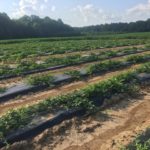
Thanks to growers’ collaboration and help from Superior Ag, we collected plant tissue samples from 12 watermelon fields at different crop growing stages in Southern Indiana in the 2020 season. In a previous article, we discussed results about magnesium and potassium. In this article, we will discuss another nutrient, Sulfur (S). Sulfur deficiency has become…Read more about Survey of Watermelon Nutritional Status in Southern Indiana – Sulfur[Read More]
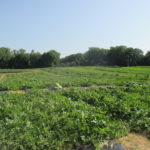
This article addresses considerations of using grafted watermelon plants in Indiana. Choosing rootstocks Interspecific hybrid squash is the most widely used watermelon rootstock. Many cultivars of the hybrid squash rootstocks that have been developed by different companies, share similar genetic background and thus similar characteristics. All of them have outstanding resistance to Fusarium wilt, but,…Read more about Using Grafted Watermelon Plants in Indiana[Read More]
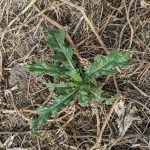
The vegetable crops have all been harvested and it’s time to just relax, right? Maybe. However, the decisions you make this fall will influence your weed control next spring. In all likelihood, you did not control EVERY weed during the growing season. Inevitably, there were weeds that escaped control. If so, these weeds have already…Read more about Post-harvest Weed Management[Read More]

The rain events northern Indiana saw last week may be the last significant precipitation seen in Indiana for the next several weeks. The US Drought Monitor has already place most of the state in abnormally dry to moderate drought conditions and there doesn’t seem to be much relief in sight. South-central Indiana’s precipitation amounts so…Read more about Dry Conditions Expected for the Rest of September[Read More]
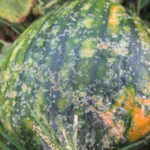
This time of year you are likely getting bogged down in the fight against pests. The accumulation of plant pathogens, insects, and climatic conditions favoring their growth can make the last few weeks of harvest feel like the toughest point in the battle. For cucurbit growers in particular, there are a number of insect pests…Read more about Cucumber Beetles Just Don’t Quit![Read More]
North Central Region Sustainable Agriculture Research and Education (NCR-SARE) will host a Farmer Rancher Grant Program grant webinar on Tuesday, September 22 from 4-5:30pm CDT. This webinar will help guide participants through the process of submitting a grant proposal to NCR-SARE’s Farmer Rancher grant program. Join Joan Benjamin, NCR-SARE Farmer Rancher Grant Program Coordinator, to learn how to…Read more about NCR-SARE to Host Farmer Rancher Grant Writing Webinar, Tuesday, September 22nd[Read More]
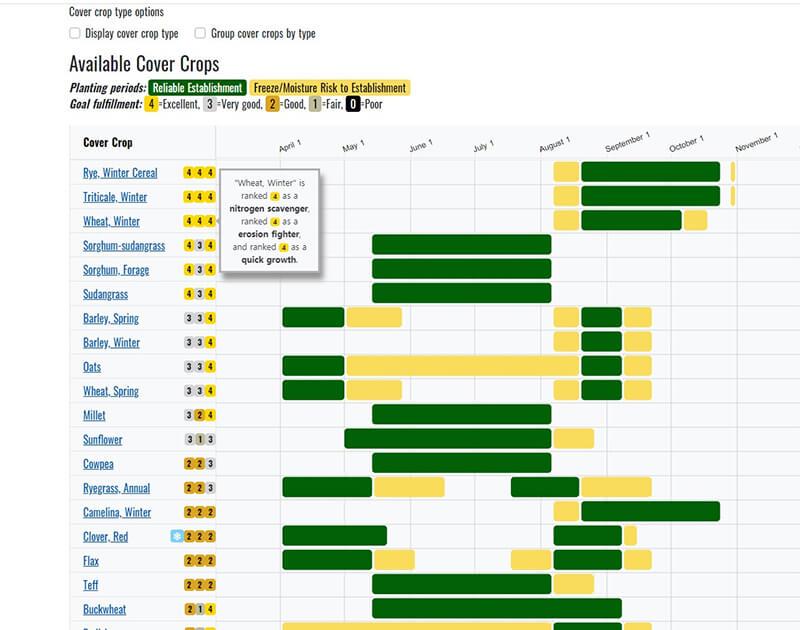
Cover crops have been shown to improve water and soil quality, reduce erosion and capture nutrients. Choosing the right cover crop, however, can be difficult. The Midwest Cover Crops Council (MCCC) —made up of representatives from 12 Midwest states and universities, including Purdue, the province of Ontario and other agricultural stakeholders — is rolling out an improved cover…Read more about Improved Tool can Help Midwest Farmers with Cover Crop Decisions[Read More]
Purdue University prohibits discrimination against any member of the University community on the basis of race, religion, color, sex, age, national origin or ancestry, genetic information, marital status, parental status, sexual orientation, gender identity and expression, disability, or status as a veteran. This material may be available in alternative formats. 1-888-EXT-INFO Disclaimer: Reference to products in this publication is not intended to be an endorsement to the exclusion of others which may have similar uses. Any person using products listed in this publication assumes full responsibility for their use in accordance with current directions of the manufacturer.