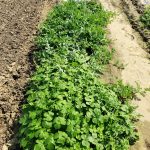
Watermelon is growing in this bed, but something went wrong. What happened?
Found 1707 Articles
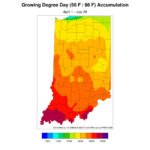
On July 16th, the national Climate Prediction Center released the climate outlooks for August (Figure 1) and the August-September-October (Figure 2) period. Both outlooks are indicating a significant probability for above-normal temperatures. Precipitation is likely to be above normal for the southern two-thirds of Indiana in August, but there is little-to-no guidance for the 3-month,…Read more about Indiana Climate and Weather Outlook[Read More]

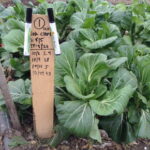
A lot of things are different this year. With the changes come opportunities to try something new. Liz Brownlee with Hoosier Young Farmers Coalition mentioned to me that some markets, especially in rural areas, do not have a steady supply of Fall crops, and that farmers might be looking to extend the season with crops…Read more about Is This the Year to Try Fall Crops?[Read More]
U.S. Secretary of Agriculture Sonny Perdue announced an initial list of additional commodities that have been added to the Coronavirus Food Assistance Program (CFAP), and that the U.S. Department of Agriculture (USDA) made other adjustments to the program based on comments received from agricultural producers and organizations and review of market data. Producers will be…Read more about Additional Commodities Eligible for Coronavirus Food Assistance Program[Read More]
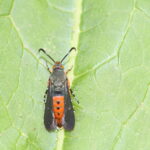
In the past two weeks we have heard reports of the Squash vine borer (Figure 1) being spotted in some local gardens. This pest of cucurbit crops tends to be sporadic in our region; you are either battling it every year or it hardly makes an appearance. The squash vine borer is a member of…Read more about Watch for a New Culprit Wilting Your Cucurbits![Read More]
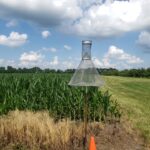
After weeks of successive trap catches in the double digits, our recent catches have gone down. Be sure to check the CEW trapping website for updates daily. At this point in the season, when field corn is in the silking stage, the threat to sweet corn, and potentially hemp, goes down. The current action threshold…Read more about Corn Earworm Trapping Update[Read More]
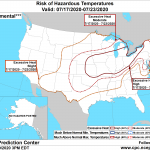
The NOAA Climate Prediction Center is showing consistent patterns the last several days for a high risk of excessive heat July 17-19. Please be prepared. Here is a factsheet about Protecting Yourself from Sun Exposure provided by Purdue Safety Specialist Brian McDonald that can be very helpful this time of the year.

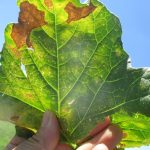
Manganese (Mn) toxicity was observed in a cantaloupe field at the Southwest Purdue Agricultural Center this year. This is a plant nutritional disorder related to acid soils and it usually occurs in clusters in a field. A plant tissue test confirmed that the Mn level in the leaves of the affected plants was 3766 ppm,…Read more about Manganese Toxicity on Cantaloupe Observed Again[Read More]
Purdue University prohibits discrimination against any member of the University community on the basis of race, religion, color, sex, age, national origin or ancestry, genetic information, marital status, parental status, sexual orientation, gender identity and expression, disability, or status as a veteran. This material may be available in alternative formats. 1-888-EXT-INFO Disclaimer: Reference to products in this publication is not intended to be an endorsement to the exclusion of others which may have similar uses. Any person using products listed in this publication assumes full responsibility for their use in accordance with current directions of the manufacturer.