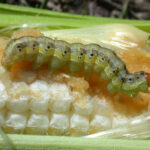
After weeks of successive trap catches being empty or in the single digits, we have seen a dramatic increase in the last couple of days in the number of corn earworm moths captured in our pheromone traps throughout the state. At multiple locations catches jumped from near nothing to hundreds of individuals in a single…Read more about Corn Earworms are Taking Flight[Read More]
Laura Ingwell

Entomology
Area(s) of Interest: Vegetable Pest Management, Protected Agriculture, Controlled Environment Agriculture, Urban Agriculture
Area(s) of Interest: Vegetable Pest Management, Protected Agriculture, Controlled Environment Agriculture, Urban Agriculture
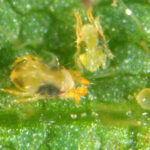
Sometimes choosing the right product to manage a particular pest can be a daunting and risky task, especially when crops are close to harvest and an imposing outbreak sneaks up on you. One such pest that is sneaky are two-spotted spider mites (Tetranychus urticae; Figure 1). This microscopic pest can hang out in the crop…Read more about Considerations when Selecting the Right Miticide[Read More]
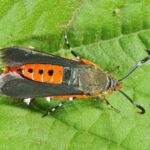
For some, we may often forget about the pesky squash vine borer until it’s too late. This pest of cucurbit crops tends to be sporadic in our region; you are either battling it every year or it hardly makes an appearance. And, unfortunately, our urban farmers tend to get hammered. While it is not so…Read more about Time to Scout for Squash Vine Borer (SVB)[Read More]

We have begun our state-wide trapping and monitoring program for corn earworm (Figure 1). The latest trap catch information can be found here. Traps have been placed at seven Purdue Agricultural Centers throughout the state. Trapping will begin June 17, 2021. Please refer to E-31 to learn more about corn earworm identification and management. Management…Read more about Corn Earworm Trapping for the 2021 Season is Beginning[Read More]
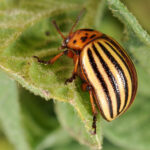
The Colorado potato beetle (CPB) is one of the most devastating pests of potato crops and is something that you should be on the lookout for NOW! This pest overwinters as an adult in the soil or field margins surrounding last year’s crop. The soils have warmed, the adults came out and eggs are now…Read more about Time to Scout for Potato Beetles[Read More]

The time has arrived to start implementing our scouting programs for monitoring and early detection, an integral part of your integrated pest management plan. In high tunnels or other protected environments there are a variety of insect pests that are capable of overwintering and can move into an of the early-season crops that you are…Read more about Early Season Scouting[Read More]

To regular readers of the Vegetable Crop Hotline, it may seem that we include an article about tomato spotted wilt virus every year out of custom. However, we have again observed large outbreaks of this disease. Please read the article below carefully if you raise tomato transplants or mature tomatoes in a greenhouse or high…Read more about Tips for Managing Tomato Spotted Wilt Virus (TSWV)[Read More]
This time of year you are likely getting bogged down in the fight against pests. The accumulation of plant pathogens, insects, and climatic conditions favoring their growth can make the last few weeks of harvest feel like the toughest point in the battle. For cucurbit growers in particular, there are a number of insect pests…Read more about Cucumber Beetles Just Don’t Quit![Read More]
Tomato spotted wilt virus (TSWV) is a plant disease caused by a virus that infects more than 1,000 species of plants, including ornamentals and vegetables. Visual symptoms of TSWV vary depending on the plant that is infected, but general characteristics include yellow or brown ringspots on fruit and small, dark-colored ringspots on foliage that may…Read more about Tips for Managing Tomato Spotted Wilt Virus (TSWV)[Read More]
