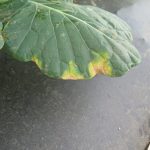
Cabbage is the crop most often affected by black rot, however, other crucifers such as broccoli, cauliflower, mustard, kohlrabi or Brussels sprouts may be affected. The first symptom one is likely to notice is a ‘V’ shaped lesion on the margin of the leaf (Figure 1). However, the symptom on Brussels sprouts observed recently are irregular, jagged…Read more about Black Rot of Crucifers[Read More]
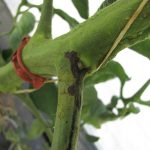
This disease has been reported in two different greenhouse situations. Although the disease is not usually economically important, a brief review of the disease is offered here to help tomato growers differentiate pith necrosis from more important problems. Tomato pith necrosis causes dark brown streaks on tomato stems and leaf petioles (Figure 1). Often stems may…Read more about Pith Necrosis of Tomato[Read More]
On May 29, 2015, the EPA issued a proposal to protect bees from acutely toxic pesticides. As stated in the announcement, “EPA is proposing to prohibit the application of pesticides that are highly toxic to bees when crops are in bloom and bees are under contract for pollination services. These restrictions would prohibit application of…Read more about EPA’s Proposal to Protect Bees[Read More]
After a brief lull in pheromone trap catches, we have resumed catching earworm moths all around the state. Although most of the counts are relatively low (less than 10 per night), remember that for early planted sweet corn that silks before the neighboring field corn silks, the threshold for treatment is 1 moth per night….Read more about Corn Earworms[Read More]
So far it appears that populations of striped cucumber beetles appear to be low to moderate in most areas. The often cool and/or wet weather may be suppressing their activity currently, so be prepared if we get a period of warm, dry weather. Remember that cantaloupes and cucumbers are most susceptible to bacterial wilt, so…Read more about Striped Cucumber Beetles[Read More]
During the past two weeks, I am aware of two beehives that were almost decimated when insecticides were used nearby. In both cases, the commercial applicators had used the DriftWatch program before spraying to look for sensitive crops or bees near the targeted crop. However, neither hive was recorded in DriftWatch. DriftWatch is a web-based program to help…Read more about DriftWatch.org Worth the Effort[Read More]
Blossom end rot of tomato has been showing up in some protected growing structures. This article reviews the disorder and summarizes preventive practices. Blossom end rot is a physiological disorder caused by a deficient supply of calcium to the developing fruit. It is a common problem on tomatoes, but can also occur on peppers, eggplants,…Read more about Blossom End Rot of Tomato[Read More]
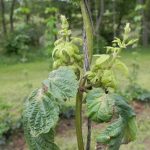
Purdue University’s Boiler Hop Yard has started its second growing season with the hopes of providing Indiana growers with science-based recommendations for hop production in the Midwest. With summer rapidly approaching, hop bines are now climbing over 10 feet high in portions of Indiana, and the Boiler Hop Yard is no exception. Downy Mildew. One…Read more about Boiler Hop Yard Update[Read More]
”Planning for Success: Food Safety Plan Writing” began Thursday June 4 and will continue on June 18 and July 1. The program is offered via WebEx, or by phone for audio only. Each program includes a presentation followed by time for discussion and questions and answers. “The programs are designed so that growers can participate over a lunch hour and…Read more about Planning for Success: Food Safety Plan Writing[Read More]
A field day will be held on July 9 to share with the public the various research activities at the Southwest Purdue Agricultural Center in Vincennes, IN. The day will start at 7:30 A.M. with a health fair. Registration starts at 8:30 A.M. Presentation topics include: managing cucumber beetles while protecting bees, production of vegetables…Read more about Southwest Purdue Agricultural Center Field Day[Read More]
Purdue University prohibits discrimination against any member of the University community on the basis of race, religion, color, sex, age, national origin or ancestry, genetic information, marital status, parental status, sexual orientation, gender identity and expression, disability, or status as a veteran. This material may be available in alternative formats. 1-888-EXT-INFO Disclaimer: Reference to products in this publication is not intended to be an endorsement to the exclusion of others which may have similar uses. Any person using products listed in this publication assumes full responsibility for their use in accordance with current directions of the manufacturer.