
There are three important caterpillar pests of crucifers in Indiana, the imported cabbageworm, the cabbage looper, and the diamondback moth. Each of these caterpillars will feed on leaves and heads. All are capable of producing serious damage to most crucifers. The adult imported cabbageworm is a common white butterfly with black spots on the forewing…Read more about Caterpillars in Crucifers[Read More]
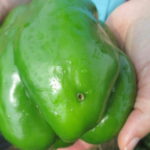
European corn borers used to be a serious pest of peppers. The larvae would burrow into the fruit under the cap, making it difficult to cull out infested fruit. With the widespread adoption of Bt corn by agronomic farmers, populations of corn borers have been greatly reduced. However, it appears that in the last couple…Read more about Caterpillars in Peppers[Read More]
Populations of earworms, as evidenced by pheromone trap catches, have not gone to zero as the often due in July. Catches have been fairly low, but moths are still flying and presumably laying eggs. The good news is that in most areas, dent corn is silking, which attracts most of the moths away from our…Read more about Corn Earworms[Read More]
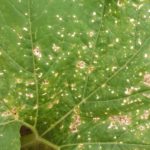
I have observed this disease in scattered commercial pumpkin and squash fields across Indiana. Bacterial leaf spot of pumpkin is perhaps the most serious disease of pumpkin in Indiana today. Symptoms: Bacterial spot causes ⅛-¼ inch angular leaf lesions that are white to light brown in color (Figure 1). These leaf lesions may be accompanied…Read more about Bacterial Spot of Pumpkin[Read More]
After harvest, storing vegetables in optimal conditions is important to ensure the whole season’s hard work has paid off. This article discusses the optimum storage conditions for tomato, pepper, cucumber, watermelon, cantaloupe and sweet corn. Tomato Ideal storage conditions for tomatoes depend on the maturity stage of picking. If tomatoes are picked at mature green,…Read more about Optimal Storage Conditions for Vegetables[Read More]
The Indiana Pesticide Clean Sweep Project is a great opportunity to legally dispose of unwanted chemicals. It is free of charge up to 250 pounds. To dispose of pesticides, complete the 2017 Pesticide Clean Sweep Planning form (the form is attached to the newsletter) and mail, fax or e-mail the completed form to Kevin Neal at Purdue University….Read more about Time to Dispose of Unwanted Pesticides[Read More]

Southwest Purdue Ag Center High Tunnel Tour Date: Thursday, August 10, 7 p.m.-9 p.m. (EDT) Location: Southwest Purdue Agricultural Center, 4669 North Purdue Road, Vincennes, IN, 47591 Registration: Visit http://tinyurl.com/yc5lqvez or call (812) 886-0198 For more information, contact: Wenjing Guan at guan40@purdue.edu or Dan Egel at egel@purdue.edu During the evening event at Southwest Purdue Agricultural…Read more about Upcoming Events[Read More]
Purdue University prohibits discrimination against any member of the University community on the basis of race, religion, color, sex, age, national origin or ancestry, genetic information, marital status, parental status, sexual orientation, gender identity and expression, disability, or status as a veteran. This material may be available in alternative formats. 1-888-EXT-INFO Disclaimer: Reference to products in this publication is not intended to be an endorsement to the exclusion of others which may have similar uses. Any person using products listed in this publication assumes full responsibility for their use in accordance with current directions of the manufacturer.