This is the final issue of the Vegetable Crops Hotline (VCH) for 2018. Subscribers who receive a paper copy in the mail need to renew. A renewal form is included with this issue. We are providing up-to a three years’ subscription of VCH at a reduced price (1 year for $15, 2 years for $25, and 3…Read more about Time to Renew[Read More]
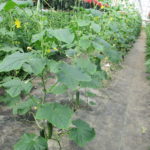
Cucumbers are extremely sensitive to cold. Locally grown cucumbers are almost only available in the summer. While in Asia, without the use of fancy heated greenhouses, cucumbers can grow all winter. Growing grafted cucumbers with cold tolerant squash rootstock is one of the key factors making this possible. Since 2016, we started to evaluate opportunities…Read more about Growing Grafted Cucumbers for Early Season Production in Protected Cultural Systems — Lessons Learned from on-farm Trials[Read More]
We are going to continue the study of evaluating grafted cucumbers for early season production in greenhouses and high tunnels by collaborating with farmers. You will find what we have learned through the process in the previous article. The same as last year, we are going to supply grafted and normal cucumber plants for free….Read more about Are You Interested in Participating in a Grafted Cucumber Study?[Read More]
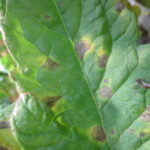
The following two articles describe two vegetable diseases new to Indiana that were recorded this past season. While neither of the disease reports are from severe outbreaks, it might be a good idea to become familiar with what may become a new disease situation. Target spot of tomato was identified from a tomato plant growing in…Read more about New Disease Report – Target Spot of Tomato[Read More]
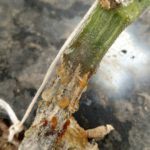
This disease was identified on a long Asian cucumber growing in a high tunnel in Mid-June in Knox County. The first symptom noted was wilting of the cucumber plant. Upon closer examination, a light, gray necrosis was observed on the lower portion of the plant. In Figure 1, you may notice dark spots in the…Read more about New Disease Report – Charcoal Rot of Cucumber[Read More]
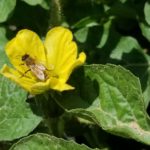
Insecticides are often needed to control pests in vegetable crops, but in crops that require pollinators we often worry about the impact those insecticides may have on those pollinators (Figure 1). In the summer of 2018, a team of researchers at Purdue University explored the effects of insecticide applications on watermelon yield across Indiana, considering…Read more about IPM Revisited: A Cost-effective Solution for Balancing Pest and Pollinator Management[Read More]
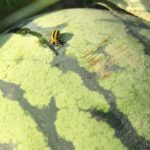
Striped cucumber beetle can be a significant pest in watermelon production systems. These pests can cause feeding damage to roots, stems, leaves, and flowers of plants as well as the watermelon fruit itself (Figure 1). In large enough densities, this damage can lead to economic loss. The economic threshold for striped cucumber beetles in watermelon…Read more about Striped Cucumber Beetles: Densities and Effective Scouting in Watermelons[Read More]
Crop rotation is a standard part of vegetable crop production. At its core, crop rotation is a management tactic meant to disrupt pest lifecycles and decrease the incidence of economically damaging infestations of insects and pathogens. However, surprisingly little scientific research appears to have explored which rotations are most effective for breaking pest lifecycles and…Read more about We Need Your Feedback on Veggie Rotations and Field Layouts[Read More]
Two new versions of vegetable disease extension bulletins: Downy Mildew of Cucurbits and Fusarium Wilt of Watermelon are available. They can be downloaded at: Downy Mildew of Cucurbits: https://mdc.itap.purdue.edu/item.asp?itemID=23207 Fusarium Wilt of Watermelon: https://mdc.itap.purdue.edu/item.asp?itemID=23211
Vegetable growers will find information-packed sessions at the Indiana Hort Congress next February. A few of the featured topics are highlighted in this article. Visit inhortcongress.org to see the full schedule and register. Climate will be the focus on Tuesday afternoon in a session sponsored by the USDA Midwest Climate Hub, Midwestern Regional Climate Center,…Read more about Indiana Hort Congress—Vegetable Session[Read More]
Purdue University prohibits discrimination against any member of the University community on the basis of race, religion, color, sex, age, national origin or ancestry, genetic information, marital status, parental status, sexual orientation, gender identity and expression, disability, or status as a veteran. This material may be available in alternative formats. 1-888-EXT-INFO Disclaimer: Reference to products in this publication is not intended to be an endorsement to the exclusion of others which may have similar uses. Any person using products listed in this publication assumes full responsibility for their use in accordance with current directions of the manufacturer.