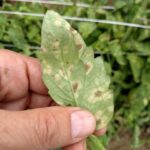
In 2015 and 2018, I observed Cercospora leaf mold of tomato in high tunnel operations. In Hotline articles in those years, I noted that Cercospora leaf mold is normally a subtropical disease. This disease has again been observed in 2021 on tomatoes in high tunnels. I’m still not certain of the importance of this disease…Read more about Tomato Leaf Mold Diseases[Read More]
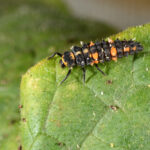
If you’re like us, as the season winds down it may seem like your insect pest management efforts are beginning to look a bit more reactive and less preventative. We’re hearing from growers that aphids, mites, caterpillars and stinkbugs are especially challenging in various veggie crops now, particularly tomatoes! In an attempt to ease some…Read more about Late-season Insect Management in Veggies, Especially Tomatoes[Read More]
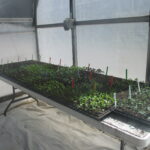
As warm-season crops are harvested, many vegetable farmers start the process of transitioning to cool-season crops. Leafy greens and root vegetables are ready to be planted. High temperature is present across the state recently. The heat stress may affect germination and growth of some of the vegetables. Spinach is probably one of the most heat-sensitive…Read more about Heat Effects on Cool-season Vegetables[Read More]
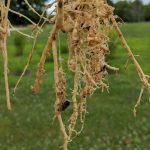
Root-knot nematodes (RKN) are a devasting soilborne pest on a wide range of vegetables and fruits. They are most active in well-aerated soils and they like warm weather. Increasingly, we saw this pest in our regions. Root-knot nematode infections result in root swellings called galls, and heavily infected crops by RKN display aboveground symptoms such…Read more about Root-knot Nematode on Vegetable Crops[Read More]
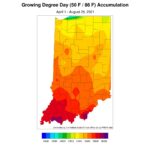
A lack of abundant precipitation over the past month has caused abnormally dry conditions to expand across Indiana this week with several counties in central Indiana intensifying to the Moderate Drought stage of the US Drought Monitor (Figure 1). Some intense weather systems passed through the state this week (Figure 2), however, this was not…Read more about Drought Intensifying Across Central Indiana[Read More]
Dr. Margaret McGrath’s lab from Cornell University has developed a great resource for growers interested in using biopesticides to manage vegetable diseases. https://www.vegetables.cornell.edu/ipm/diseases/biopesticides/ This article provides a general introduction of biopesticides, major types of biopesticides, and the pros and cons of using them. The website also lists representative biopesticide products that are available for managing…Read more about Resources for Biopesticides for Vegetable Disease Management[Read More]
Organic producers and handlers can now apply for U.S. Department of Agriculture (USDA) funds to assist with the cost of receiving or maintaining organic certification. Applications for the Organic Certification Cost Share Program (OCCSP) are due Nov. 1, 2021.
Purdue University prohibits discrimination against any member of the University community on the basis of race, religion, color, sex, age, national origin or ancestry, genetic information, marital status, parental status, sexual orientation, gender identity and expression, disability, or status as a veteran. This material may be available in alternative formats. 1-888-EXT-INFO Disclaimer: Reference to products in this publication is not intended to be an endorsement to the exclusion of others which may have similar uses. Any person using products listed in this publication assumes full responsibility for their use in accordance with current directions of the manufacturer.