Does your farm sometimes have surplus produce? Produce that is perfectly good to eat, but isn’t going to make it to market? Society of St. Andrew can help you harvest and transport the excess to help feed those struggling to get enough to eat. Gleaning America’s Fields – Feeding America’s Hungry. We do it simply,…Read more about Gleaning America’s Fields – Feeding America’s Hungry[Read More]

FieldWatch is an easy-to-use, reliable, accurate and secure on-line mapping tool intended to enhance communications that promotes awareness and stewardship activities between producers of specialty crops, beekeepers, and pesticide applicators. Originally developed at Purdue University, FieldWatch is now a non-profit company with support from producers, applicators, agricultural chemical companies and other organizations. The program allows…Read more about Update your FieldWatch Information and Report Off-target Damage[Read More]
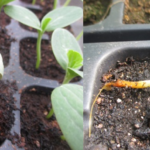
Producing healthy transplants is a critical step for a successful growing season. Choosing the proper growing media is an important first step. Supported by a USDA Specialty Crops Block Grant through the Indiana State Department of Agriculture, researchers from Purdue have been evaluating different organic growing media with and without adding supplemental organic fertilizers for…Read more about Abnormal Transplant Symptoms Might be Caused by Poor Media[Read More]
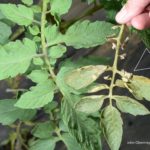
As we wait patiently for the ground to dry and our seedlings to grow, take a moment to consider your strategy for maintaining plant health. If you haven’t started already, it is time to make sure that your pest monitoring programs are in place for the season. For those of you growing in high tunnels,…Read more about Pest Monitoring[Read More]

No reason exists to expect drought anytime soon in Indiana, with much of the state remaining rather wet after last weekend’s showers. One good new development exists. The precipitation pattern that has existed since nearly January seems to be becoming a little less predictable, which could mean more periods of drier weather between fronts on…Read more about Indiana Climate and Weather Report[Read More]
From time to time, I will make changes to the MW Vegetable Production Guide. These changes will appear automatically in the on-line version. For those who purchase a hard copy, watch the Vegetable Crops Hotline for changes. See below for the changes that have been made to the Production guide for 2019 Page Comment…Read more about MW Vegetable Guide Updates[Read More]

I know as producers of some of the finest fruits, veggies, herbs and flowers in Indiana no one is more excited to welcome Spring and a new market year than YOU! Whether or not you have used FoodLink in the past as a way to increase consumer knowledge of and interest in your products we…Read more about Welcome to Spring and FoodLink[Read More]
On April 1, 2019, Dr. Hazel Wetzstein, Head of the Department of Horticulture and Landscape Architecture, announced a change in leadership for the Indiana Horticulture Congress. “I am pleased to announce that Petrus Langenhoven and Kyle Daniel have agreed to serve as Co-Chairs for the Indiana Horticulture Congress, effective immediately. They bring a wealth of…Read more about New Leadership Appointed for the Indiana Horticulture Congress[Read More]
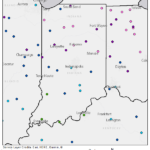
The rain seems to keep falling, barely providing time for things to dry out and start planting! The last few weeks has experienced up to 2” above normal precipitation – particularly for west-central and southern Indiana, which is near the 125th-125th percentile. Warm days seem to be relatively few and far between, causing a slow…Read more about Indiana Climate and Weather Report[Read More]
Basic Aspects of High Tunnel Soil Fertility Management – (Petrus Langenhoven, plangenh@purdue.edu, 765-496-7955) – Spring has arrived! Every high tunnel grower is now thinking of planting summer vegetable crops in high tunnels or has already planted. Whichever scenario applies to you, I hope that you have submitted soil samples or are in the process of…Read more about Basic Aspects of High Tunnel Soil Fertility Management[Read More]