Would you buy something if you didn’t understand how it worked or what to do with it? Likely not… Imagine a customer of yours who doesn’t know how to select, prepare or store the fresh healthful produce that you are growing and offering for sale. How likely is it that they will buy that product? Or buy it twice?…Read more about Use FoodLink to Increase Awareness and Sales of Fresh Produce[Read More]
Vegetable Crops - General
Nematology lab at Purdue University will be closing at the end of June. The first of June is the last day the lab will accept samples. A list of private and public nematology labs can be found here. Please contact these labs for their requirements for nematode sample submission. Click here to view the listing…Read more about Nematology Lab at Purdue will be Closing[Read More]
Thinking of sending samples of your vegetables to the Plant and Pest Diagnostic Lab for diagnosis or insect ID? Here are some tips to help the samples arrive in the best possible condition for testing. Fill out a sample submission form. Download at: https://ag.purdue.edu/btny/ppdl/Pages/physicalspecimens.aspx If sending more than one kind of plant or problem be…Read more about Tips for Submitting Samples to the Purdue Plant and Pest Diagnostic Lab (PPDL)[Read More]
One can hardly glance at the news recently without noticing an item about the health of bees and other pollinators. We can all agree on the importance pollinators play in the health of our planet and the critical role honey bees and bumble bees play in agriculture. There is no doubt that populations of honey…Read more about Pollinator Health and Foliar Fungicide Use[Read More]
Many pesticides for use on vegetables have varying rules for use in different states. This article will review the different classes of labels for pesticides and where to find labels online. The shorthand names for classes of labels come from the section of the Federal Insecticide, Fungicide, and Rodenticide Act that governs each class. National…Read more about Finding Pesticide Labels for State-specific Registrations[Read More]
The Midwest Vegetable Production Guide for Commercial Growers 2018 (ID-56) was printed in December 2017. At the same time, the on-line version was posted at mwveguide.org. As updates need to be made to the ID-56, I will make those updates to the on-line version. I will announce these updates in the Hotline as I post…Read more about Updates to the Midwest Vegetable Production Guide[Read More]
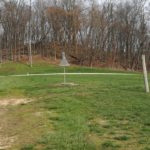
One way insects communicate with individuals of the same species is with pheromones. Pheromones are volatile chemicals released by an insect that usually can be detected only by individuals of the same species. There are a number of different types of pheromones, but the most common type is the sex pheromone. Usually the females will…Read more about Pheromones and Pheromone Traps[Read More]
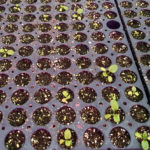
This is the time of year when growers begin planting seed—whether you are child planting a few seeds in Dixie cup for a school project, home tomato growers, or professional horticulturists. Unfortunately, one problem you may share in common is damping-off. Damping-off describes the death of seeds or seedlings and includes all of the following…Read more about Damping-off[Read More]

This article is my response to a grower’s question about lowering soil pH in a high tunnel. The soil test indicated pH of the soil in his high tunnel was 7.7. The high pH could be partially caused by alkaline water he used to use for irrigation. The grower has changed the water source, but…Read more about Lowering Soil pH in High Tunnels[Read More]
On January 1, products containing >6.5% dicamba and an agriculture use label are now restricted use pesticides. In order to purchase these herbicides, buyers must carry a private or commercial pesticide applicator license. While dicamba herbicides have been on the market for over 50 years to control broadleaf weeds, the recent development of dicamba resistant…Read more about Using Driftwatch/Fieldwatch to Help Dicamba Applicators Locate Sensitive Crops[Read More]