We have discussed the pros and cons of using shade cloth for growing high tunnel tomatoes in this article https://vegcropshotline.org//article/whether-to-put-shade-cloth-on-high-tunnel-tomatoes/ Shade cloth helps with reducing temperatures inside the high tunnel. But it also reduces light intensity that is essential for photosynthesis. To better understand to what extent can temperature and light reduced with a shade cloth…Read more about Temperature and Light Intensity in a High Tunnel Covered with 30% Black Shade Cloth[Read More]
Greenhouses & High Tunnels
We have grown strawberries from Aug, 2015 to May, 2016 in one of our high tunnels at Southwest Purdue Agricultural Center. After taking the strawberry plants out of the high tunnel in the end of May, we did have enough time to grow a warm-season crop, like cucumbers. However, because for most of us June…Read more about A Case Study: What Cover Crops Could Achieve in High Tunnels in the Middle of Summer?[Read More]
We are familiar with strawberries grown as a perennial crop in Indiana. Bare root strawberry plants are set in the spring. Fruit is first harvested in the second year and the planting is renovated annually. Using this system, strawberry seasons last for three to four weeks from middle May through June. The traditional system has been…Read more about Evaluation of Strawberry Varieties for High Tunnel Production[Read More]

Driving across IN now, it is not uncommon to see many recently built high tunnels standing along the roadsides. These structures have become an important tool for farmers to extend production seasons of vegetable and fruit crops. Compared with traditional greenhouses, high tunnel demand much less energy as they are heated by solar energy and…Read more about Chinese-style Solar Greenhouses[Read More]
Read more about Chinese-style Solar Greenhouses
Hornworms can be pests of tomato and pepper in field grown crops, but for some reason seem to be particularly severe in high tunnels. Hornworms are very large caterpillars, measuring up to 4 inches long (Figure 1), and they can consume large quantities of foliage and will also feed on green fruit (Figure 2). In…Read more about Hornworms[Read More]
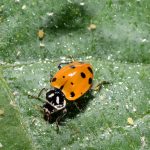
Supplementing the natural enemy population to control insect pests, i.e. augmentation biological control, is of interest to many high tunnel producers. Augmentation biological control has proven very effective at managing a number of greenhouse pests and there are a variety of commercial suppliers. For high tunnels, the greatest challenge is keeping the released predators or…Read more about Augmentation Biological Control in High Tunnels[Read More]
Last week, the highest temperature reached 110°F for a few successive days inside of our high tunnels. As a result, we observed some blossom drop on tomatoes. More information on high temperature effects on tomato fruit set can be found here. In addition to blossom drop, high temperature and high light intensity contribute to sunscald injury,…Read more about Whether to Put Shade Cloth on High Tunnel Tomatoes[Read More]
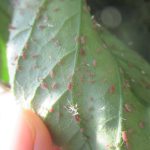
We have begun to receive the first reports of aphid outbreaks in high tunnels on tomato, pepper, and cucumber (Figure 1). Aphids are a very common problem in high tunnels because the covering excludes rainfall, which is a major mortality factor for small insects like aphids. Some growers are interested in using biological control in…Read more about Aphids in High Tunnels[Read More]
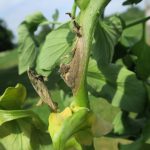
I have observed leaf mold of tomato in greenhouses and high tunnels recently. This article will discuss this disease and management options. In the last issue of the Hotline, I discussed Botrytis gray mold. I noted how gray mold is favored by the cool, cloudy weather we experienced earlier this spring. The warmer and sunnier weather we have…Read more about Leaf Mold of Tomato[Read More]
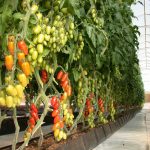
Planting density plays an important role in the optimization of labor efficiency and productivity of your high tunnel. For the purpose of this article I will focus on tomato which is commonly grown as a high value crop on small farming operations. Usually growers select varieties according to customer (market) preference and then try to…Read more about Link between Plant Density, Yield and Revenue from a High Tunnel[Read More]