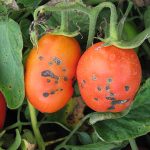
Bacterial spot of tomato causes lesions on foliage and fruit of tomato. On leaves, the lesions begin as small water soaked areas and turn into brown lesions with a yellow halo. Lesions on stems often lack a yellow halo. Fruit lesions, which are responsible for direct loss of marketable yield, are often scabby in appearance (Figure…Read more about Quintec Labeled for Bacterial Spot of Tomato[Read More]
Plant Disease Management
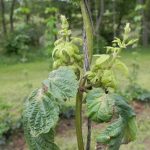
Purdue University’s Boiler Hop Yard has started its second growing season with the hopes of providing Indiana growers with science-based recommendations for hop production in the Midwest. With summer rapidly approaching, hop bines are now climbing over 10 feet high in portions of Indiana, and the Boiler Hop Yard is no exception. Downy Mildew. One…Read more about Boiler Hop Yard Update[Read More]
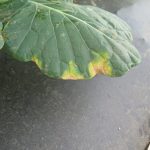
Cabbage is the crop most often affected by black rot, however, other crucifers such as broccoli, cauliflower, mustard, kohlrabi or Brussels sprouts may be affected. The first symptom one is likely to notice is a ‘V’ shaped lesion on the margin of the leaf (Figure 1). However, the symptom on Brussels sprouts observed recently are irregular, jagged…Read more about Black Rot of Crucifers[Read More]
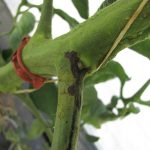
This disease has been reported in two different greenhouse situations. Although the disease is not usually economically important, a brief review of the disease is offered here to help tomato growers differentiate pith necrosis from more important problems. Tomato pith necrosis causes dark brown streaks on tomato stems and leaf petioles (Figure 1). Often stems may…Read more about Pith Necrosis of Tomato[Read More]
Blossom end rot of tomato has been showing up in some protected growing structures. This article reviews the disorder and summarizes preventive practices. Blossom end rot is a physiological disorder caused by a deficient supply of calcium to the developing fruit. It is a common problem on tomatoes, but can also occur on peppers, eggplants,…Read more about Blossom End Rot of Tomato[Read More]
Samples in plug trays, as well as unrooted and rooted cuttings, and plants in pots require extra care when they are packaged for submittal to a diagnostic lab. Before you mail the next sample, please take a few minutes to review these suggestions for packaging and submitting samples. This will help preserve the integrity of…Read more about Tips for Submitting Greenhouse Samples to the Purdue Plant and Pest Diagnostic Lab[Read More]
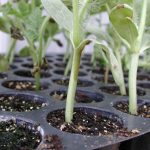
Most watermelon growers are in the process of placing transplants in the field. I have received several commercial samples of transplants still in trays prior to out-planting. The two diseases I have observed so far are gummy stem blight and bacterial fruit blotch. Below, I discuss these two diseases as well as management options. Gummy stem blight on…Read more about Watermelon Disease Update[Read More]
Many cantaloupe and watermelon growers have planted transplants in the field or will soon. A question many growers often have is when and how should one apply fungicides. Applying fungicides according to a weather-based system is easy for cantaloupe and watermelon growers. MELCAST was developed at Purdue University by Rick Latin to allow growers to…Read more about MELCAST[Read More]
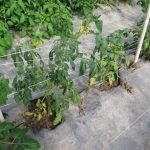
Symptoms of this disease include tomato plants with lower leaves that become yellow (chlorotic) and die; plants that begin to wilt; a lesion on the lower stem at ground level (Figures 1 and 2). If tomato plants are removed from the soil and carefully split open from the ground level, a discoloration of the vascular tissue…Read more about Fusarium Crown and Root Rot of Tomato[Read More]
Since the season of applying fungicides to vegetable crops has arrived, below I have listed 10 rules that will help vegetable growers apply fungicides effectively and safely. Apply fungicides prior to the development of disease. Although many fungicides have systemic (“kick back”) action they will not completely eradicate diseases after they have started. And by…Read more about 10 Useful Rules for Fungicide Applications[Read More]