
This article is my response to a grower’s question about lowering soil pH in a high tunnel. The soil test indicated pH of the soil in his high tunnel was 7.7. The high pH could be partially caused by alkaline water he used to use for irrigation. The grower has changed the water source, but…Read more about Lowering Soil pH in High Tunnels[Read More]
Soil Fertility and Fertilizers
Soil nutrients, plant nutrition, soil testing and sampling, soil acidity, soil organic matter, green manures and cover crops, animal manures, fertilizer recommendations, fertilizer materials, etc.
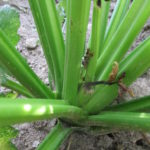
Blackheart of celery is a physiological disorder that causes significant crop loss in major celery production areas. It is characterized by the breakdown of young leaf tissues in the heart of the plants (Figure 1). The affected young tissues turn black, which give it the name “blackheart”. The cause of blackheart of celery is related…Read more about Blackheart of Celery[Read More]

When mixing fertilizers, it is important to check fertilizer compatibility before application. If incompatible fertilizers are mixed, they form insoluble precipitations that can clog drip emitters and damage sprayers used to apply foliar fertilizers (Figure 1.). This article discusses a few scenarios for which special attention should be paid on the solubility of mixed fertilizers….Read more about Fertilizer Compatibility[Read More]
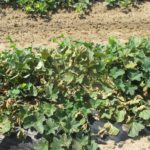
Manganese toxicity is a common problem for cantaloupes growing in sandy soils across southwestern Indiana. Because symptom of manganese toxicity can easily be confused with foliar diseases, growers may misdiagnose the problem and waste fungicides by spraying for nonexistent diseases. As we now know that manganese toxicity is a nutrient related disorder caused by low…Read more about Manganese Toxicity on Cantaloupes[Read More]

In the past few weeks, we have received several reports about blossom end rot on tomatoes and peppers as the crops start to set fruit. Blossom end rot is a physiological disorder (not an infectious disease) that commonly occurs on tomatoes and peppers. Initial symptoms of the physiological disorder include dark green or brown water-soaked leisure…Read more about Blossom End Rot of Tomato and Pepper[Read More]
Developing and mixing your nutrient solution is one of several very important steps in the production process. Mistakes are easily made when fertilizers are mixed. Not only does this have a cost implication, but also it can have severe consequences on production and therefore revenue. In the previous article Taking Care of Plant Nutrition in…Read more about Taking Care of Plant Nutrition in Your High Tunnel – Fertilizer and Nutrient Solution Mixing Tips[Read More]

Every grower will have to do some basic calculations when mixing a nutrient solution. Understanding some of the calculations will help you to apply the correct concentration of a nutrient or determine the concentrations of a combination of nutrients applied. In the previous article Taking Care of Plant Nutrition in Your High Tunnel-Water Hardness and…Read more about Taking Care of Plant Nutrition in Your High Tunnel – Water Soluble Fertilizer Calculations[Read More]
It is essential, especially in hydroponics to start with a laboratory analysis of your source water. It is also important to do follow-up analysis throughout the year. Water quality can change especially where the water source is a well or a pond. In the article Taking Care of Plant Nutrition in Your High Tunnel-Water Alkalinity (Issue…Read more about Taking Care of Plant Nutrition in Your High Tunnel – Water Hardness and the Removal of Unwanted Ions[Read More]
In the past I have had many conversations with growers about plant nutrition in their high tunnels. A good plant nutrient management plan is an integral part of making a success of the crop you are growing. Plant nutrition is important to grow a strong and healthy seedling, the first step of a successful crop….Read more about Taking Care of Plant Nutrition in Your High Tunnel – Water Alkalinity[Read More]
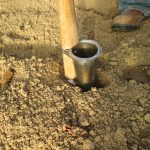
We can never emphasize too much the importance of conducting soil tests. Ideally, soil test should be conducted on a yearly basis. The reason soil testing is so important is because it provides information about the nutrient composition of the soil so that growers will know how much fertilizer to apply for the following season….Read more about Soil Tests[Read More]