Welcome to the Vegetable Crops Hotline (VCH), Purdue Extension’s exclusive newsletter for people in the business of growing vegetables. Once again, we have a bumper issue. It seems that by Memorial weekend, we can look forward to even warmer days. If you have not done it yet, now is the time to get those heat-loving…Read more about From the Editor’s Desk[Read More]
Found 1626 Articles
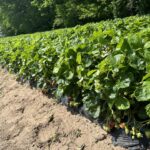
Plasticulture strawberry harvest has kicked off in southern Indiana. These plants went through a winter of temperature ups and downs and survived the unexpected frosts in April. Finally, it is harvest time! This article’s title is a question from a grower. The straightforward explanation is that plants received more sunlight and warmed up faster on…Read more about Why do the East Side of My Strawberry Rows Have Way More Ripe Ones than the West Side?[Read More]

The Purdue Small Farm Education Field Day is presented on July 27, 2023, at the Purdue Student Farm in West Lafayette, IN. You can still register for the field day. To reserve your spot, visit https://cvent.me/ewWN3b. Registration closes on July 21, 2023. Students register for free! Please contact Lori Jolly-Brown to receive the discount code…Read more about Small Farm Education Field Day – Register Now![Read More]
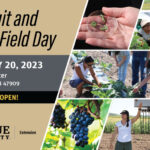
We are happy to announce that Purdue Extension is presenting its annual Fruit and Vegetable Field Day on July 20, 2023, at the Throckmorton/Meigs Horticulture Farm, Lafayette, IN. Registration is now open. To register your spot, visit https://cvent.me/5zevYD A complete schedule of demonstrations is now available on the Vegetable Crops Hotline webpage. Look under the…Read more about Purdue Fruit and Vegetable Field Day – Register Now![Read More]
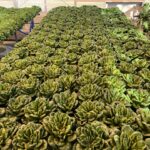
This is an extract from a news release by The Ohio State University. The goal of this online course is to provide hydroponic growers with the knowledge and tools needed to implement best management practices specific to controlled environments (greenhouses, indoor farms, high tunnels, etc.) to reduce microbial food safety hazards in hydroponic vegetable and…Read more about Hydroponic GAPs – Good Agricultural Practices for Food Safety of Hydroponic Crops[Read More]

Extract from a news release by SARE (5/15/2023). Sustainable farming emphasizes the need to consider the environmental, economic and social impacts of agriculture. For decades, sustainable agriculture research has focused more on environmental stewardship and profitability than on personal and social issues. SARE’s newest bulletin, Resilient Farmers, Ranchers and Communities: Social Sustainability in Agriculture, describes how…Read more about Sustainable Agriculture Research and Education (SARE) News[Read More]

To overcome religious-based objections to online exams, the Office of the Indiana State Chemist (OISC) will be offering paper-and-pencil exams at Purdue to ‘plain people.’ The remaining 2023 exam dates are as follows: June 13 and November 3 at 1 PM Eastern time. We will be offering CORE and Category 14 exams at the William…Read more about PARP News – Paper Exam Session for Plain People[Read More]
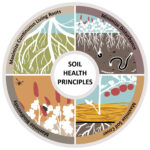
Growing vegetable crops often involves utilizing our natural resources, which include the soil. Thus, maintaining the health of this asset on our farms and growing spaces is essential. There is an initiative in the state of Indiana whose mission is to improve soil health, but its focus is on Indiana’s urban and community small-scale agricultural…Read more about Urban Soil Health Program: What and why?[Read More]
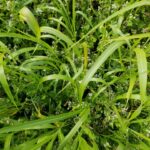
What can a relative of broom corn do for you on a vegetable farm? Build biomass while beating the heat! Sorghum-sudangrass (Sorghum x drummondii) (Figure 1) is a summer-loving hybrid cover crop species. Its parents are wild sorghum, native to sub-Saharan Africa, and domesticated sorghum, known as broom corn or milo in our part of…Read more about Cover Crop Species Spotlight – Sorghum Sudangrass[Read More]
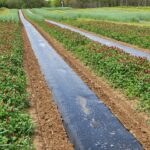
In watermelon systems in Indiana, cover crops are extensively used with the primary function of acting as a wind-break to protect the seedlings when they are planted in May. Due to the nature of the landscape and the soil type (e.g., open areas with sandy soils), seedlings are exposed to physical damage caused by sandblasting….Read more about Enhancing Insect Pest and Pollinator Management with Flowering Cover Crops[Read More]
Purdue University prohibits discrimination against any member of the University community on the basis of race, religion, color, sex, age, national origin or ancestry, genetic information, marital status, parental status, sexual orientation, gender identity and expression, disability, or status as a veteran. This material may be available in alternative formats. 1-888-EXT-INFO Disclaimer: Reference to products in this publication is not intended to be an endorsement to the exclusion of others which may have similar uses. Any person using products listed in this publication assumes full responsibility for their use in accordance with current directions of the manufacturer.