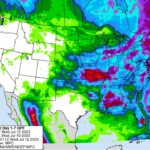
Timely rains have returned over the past few weeks and have helped crop conditions across the state. Now that we are entering critical corn and soybean growth stages, cooler temperatures and rain are certainly welcome. Although rains have returned, they continue to be inconsistent. Vigo, Sullivan, and Lawrence counties had locations receiving more than 8…Read more about Drought Conditions Continue to Improve. Will this Continue?[Read More]
Found 1707 Articles
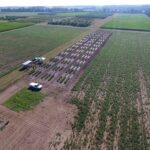
Are you still thinking of attending the Purdue Fruit and Vegetable Field Day on July 20, 2023? Well, you are in luck. Friday, July 14, is the last day to register for the field day. Register now at https://cvent.me/5zevYD The field day has an exciting lineup of demonstrations. Sweet Corn Pest Management Updates –…Read more about Last Chance to Register for the Meigs Field Day[Read More]

Dear Melon Growers and Industry Friends, You are invited to tour melon variety trials conducted at Southwest Purdue Ag Center, in Vincennes, IN, on July 26, 10:00 am-1:00 pm EST. The variety trials include: A standard-sized seedless watermelon trial A person-sized seedless watermelon trial A seeded watermelon trial A cantaloupe trial This is a self-guided…Read more about Southwest Purdue Ag Center Melon Variety Evaluation Open House on July 26[Read More]
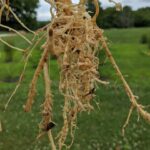
Root-knot nematodes cause severe damage in vegetable production. Its infection results in root swellings called galls that interrupt plant water and nutrient uptake (Figure 1). Aboveground, plants show symptoms that include stunted growth, wilting, and leaf yellowing. In addition to root-knot nematodes, several other plant parasitic nematodes can cause damage to vegetable roots. Damage to…Read more about Plant Parasitic Nematodes Survey in Indiana[Read More]
It is not unusual for watermelon wilt to occur in the late season in our region. The plants are loaded with fruit and are sensitive to many stresses. In some cases, it is clear pathogens cause the problem, such as late-season fusarium wilt. While in other cases, it is hard to associate the symptom with…Read more about Improving Watermelon Cultural Practices, Are We on the Right Track?[Read More]
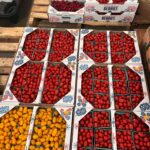
The Clearspring Produce Auction is located just 2 miles south of US 20 in Clearspring Township in the Heart of the LaGrange-Elkhart Amish Settlement. It is within easy driving distance of the towns of Shipshewana, Topeka, Emma, and LaGrange. Produce is sold 3 days a week throughout most of the growing season (Tuesday, Thursday, Friday),…Read more about Clearspring Produce Auction Price Update[Read More]
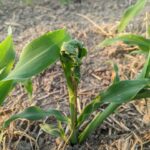
What is buggy whipping? “Buggy whipping” is the term for when leaves in the corn whorl become crinkled and fail to unfurl (Figure 1) properly. It can also be referred to as “twisted whorl syndrome” or “rapid growth syndrome”. Often these crinkled leaves bend toward the ground, resulting in an appearance some liken to a…Read more about Buggy Whipping in Sweet Corn[Read More]
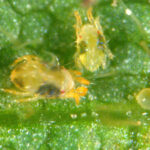
This season started out dry and hot. These are the ideal conditions for pests that we often associate with controlled environments: aphids and mites. There are a number of factors that contribute to their success in these conditions, including lack of rain which physically removes the insect from the plant and drought-stressed plants, which are…Read more about Managing Pests that Thrive in Hot and Dry Conditions[Read More]

Welcome to the Vegetable Crops Hotline (VCH), Purdue Extension’s exclusive newsletter for people in the business of growing vegetables. In this issue, we highlight watermelon vine decline, disease, pest, and herbicide issues and provide an update on vegetable pricing at the Clearspring Auction. Included are lots of information about educational opportunities at the Throckmorton/Meigs Purdue…Read more about From the Editor’s Desk[Read More]
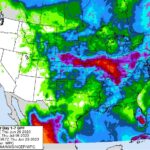
While drought has been on many people’s minds lately, Indiana has had several rain events pass through that brought much-needed moisture. Unfortunately, the entire state has not benefited evenly from these events. True to most summertime precipitation, where and when the rain falls can be quite spotty. Periodically, a nice front will pass through, but…Read more about Indiana’s Winners and Losers with Recent Precipitation[Read More]
Purdue University prohibits discrimination against any member of the University community on the basis of race, religion, color, sex, age, national origin or ancestry, genetic information, marital status, parental status, sexual orientation, gender identity and expression, disability, or status as a veteran. This material may be available in alternative formats. 1-888-EXT-INFO Disclaimer: Reference to products in this publication is not intended to be an endorsement to the exclusion of others which may have similar uses. Any person using products listed in this publication assumes full responsibility for their use in accordance with current directions of the manufacturer.