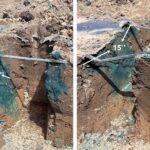
We discussed wetting patterns in drip irrigation in a previous article. The take home message is drip irrigation applies water to only a portion of the soil. Uneven water distribution in the soil profile is not a problem as long as enough water is applied to the crop. However, the water wetting pattern might influence…Read more about Water Affects Efficacy of Soil-Incorporated Fertilizers and Amendments[Read More]
Wenjing Guan

Vegetable Crops Hotline Editor & Clinical Engagement Associate Professor
Department of Horticulture and Landscape Architecture
Area(s) of Interest: Commercial Vegetable and Melon Production
Wenjing Guan's website
Department of Horticulture and Landscape Architecture
Area(s) of Interest: Commercial Vegetable and Melon Production
Wenjing Guan's website

Strawberry Chat in Sept. is about substrate production. You will learn the basics of substrate production and hear about two substrate strawberry production systems. Dr. Chieri Kubota and Mark Kroggel from The Ohio State University talk about root zone management in substrate production and introduce the greenhouse system. Richard Barnes is the owner of Tanglewood…Read more about Strawberry Chat Update[Read More]
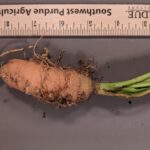
We announced in a previous newsletter article that we are doing a survey to understand the extent of root-knot nematode (RKN) damage on vegetable crops in Indiana. Among the 18 soil samples from high tunnels of 14 farms, RKNs (juvenile or adult) were found in 13 samples at 9 farms. Only 3 farmers knew RKN…Read more about Root-knot Nematode may be a Hidden Problem in High Tunnels[Read More]
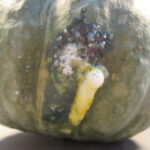
For a few years, I participated in the Squash Hunger Trial led by Dr. Annette Wszelaki, where we grew a wide range of winter squashes at multiple states. One year, I failed to manage insects, leading to a squash bug and cucumber beetle outbreak. The insects defoliated leaves (Figure 1) and caused cosmetic damage to…Read more about What Happened to the Winter Squash?[Read More]
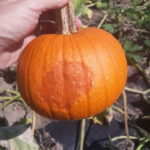
Pumpkin and winter squash should be harvested fully mature to reach their optimal quality and fulfill their potential shelf life. Characters indicating fruit maturity include loss of rind surface gloss, ground spot yellowing, and hardening of the skin to the level that it is resistant to puncture with a thumbnail. Except for some striped varieties,…Read more about Tips for Harvest and Postharvest of Pumpkin and Winter Squash[Read More]
The Aug. topic of Strawberry Chat is about plasticulture strawberry production. Our special guests were Brad Bergefurd, former Horticulture Specialist at The Ohio State University, Calvin Beasley from Beasley Orchard in Danville, IN, and Danny Vanmeter from Vanmeter Family Farm in Clarkston, KY. We discussed many important topics in plasticulture strawberry production, including site selection,…Read more about Strawberry Chat Plasticulture Production[Read More]
A major difference between drip irrigation and other irrigation methods is that drip irrigation applies water to only a portion of the soil. This works great for vegetables grown on the plastic mulch, since no irrigation water is applied between the row middles; water applied to row middles encourages weed growth. So, does the soil…Read more about Understanding Wetting Patterns in Drip Irrigation[Read More]
Midwest Mechanical Weed Control Field Day will held Wednesday, September 14, 2022 at MSU Southwest Michigan Research and Extension Center in Benton Harbor, MI. Registration and more information about the field day can be found at https://thelandconnection.org/event/2022-mmwcfd/ If you have questions about the field day, please contact Sam Oschwald Tilton (Sam.oschwaldtilton@wisc.edu), phone (608) 219-7775
Root-knot nematodes (RKN) are a devasting soilborne pest on a wide range of vegetables and fruits. Root-knot nematode infections result in root swellings called galls (Figure 1). Heavily infected crops by RKN display aboveground symptoms such as stunted growth, wilting, and leaf yellowing. We often found root-knot nematode causes damage to watermelons, cantaloupes, and tomatoes…Read more about Root-knot Nematode on Vegetable Crops[Read More]

August Strawberry Chat will be about plasticulture production. Our guests are Brad Bergefurd, a former horticulture specialist at The Ohio State University; Calvin Beasley from Beasley Orchard in Danville, IN, and Danny VanMeter from VanMeter Family Farm in Clarkson, KY. The live session is on Aug 10, 12:00-1:00 pm EST. If you are interested in…Read more about Strawberry Chat Aug. 10 Plasticulture Production[Read More]