Midwest Vegetable Trial Reports provide yield and quality data based on field test results under different cropping conditions. Reports based on projects in 2020 include variety trial results for asparagus, peppers – bell, specialty, and chile, cantaloupe, pickling cucumber, summer squash, and seedless watermelon. Cultural practice trials include no-till sweet corn and pumpkin after winter…Read more about Midwest Vegetable Trial Reports Update[Read More]
Wenjing Guan
Vegetable Crops Hotline Editor & Clinical Engagement Associate Professor
Department of Horticulture and Landscape Architecture
Area(s) of Interest: Commercial Vegetable and Melon Production
Wenjing Guan's website
Department of Horticulture and Landscape Architecture
Area(s) of Interest: Commercial Vegetable and Melon Production
Wenjing Guan's website
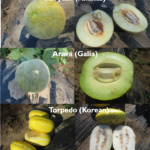
Melon is a crop with diverse fruit characteristics. They have different color, shape, rind pattern, texture, and flavor. In major food stores, cantaloupe and honeydew melons may be the only melon types sold, while the fantastic experience of melon consumption is far more than that. This created an opportunity for selling unique melon fruit at local farmers’ market and with a potentially higher price. It…Read more about Specialty Melon Evaluation in Southern Indiana[Read More]
Welcome to a new year of the Vegetable Crops Hotline (VCH), Purdue Extension’s newsletter for people in the business of growing vegetables. As usual, we will have fifteen issues throughout the 2021 growing season. The first issue of the year is sent to all who subscribed to VCH via US-mail in 2020 as well as new…Read more about Welcome to a New Year of the Vegetable Crops Hotline[Read More]

Many vegetable programs are going virtual this year. Although we missed the in-person experience, the virtual meetings provide opportunities for participating in meetings we usually can’t. Even better, many great events are free of charge, and the cost to attend large conferences is more affordable. Here are some of the upcoming free events that you…Read more about More Virtual Programs[Read More]
UC ANR and UC Davis are conducting a survey of consumers to identify which types of specialty Asian produce are almost always cooked before eating, so that Southeast Asian and other small-scale farmers can receive exemptions from federal food safety regulations for low-risk crops. The research team would appreciate your help in taking the survey…Read more about University of California Survey on Specialty Asian Produce[Read More]
The deadline to apply for the Coronavirus Food Assistance Program (CFAP) 2 is December 11, 2020. This program provides direct relief to producers who continue to face market disruptions and associated costs because of COVID-19. More information about this program can be found at https://www.farmers.gov/cfap/specialty
Cornell Cooperative Extension is a partner on a Rochester Institute of Technology project that is creating new methods for manufacturing plastic mulch and promoting its field break-down. The project aims to tightly match new product development to real-world grower preferences, on-farm use patterns, and current economic constraints surrounding plastic film use. This 5-minute survey is…Read more about Plastic Mulch Survey[Read More]
On-farm Trial #1: Location: DeMotte IN Transplant date: April 24 Heating: Plants were grown in an unheated high tunnel Plant No. and plants lost: Treatment Original plant number Plants lost by June 12 Plants lost by July 20 Manny 31 19% 55% Manny/Carnivor 35 11% 34% Green 39 10% 38% Green/Carnivor 39 0% 8% Spacing:…Read more about Summary of 2020 on-farm Grafted Cucumber Trials[Read More]
Read more about Summary of 2020 on-farm Grafted Cucumber TrialsOn-farm trial #1: Location: Camden IN Transplant date: Feb. 22 2019 Heating: Plants were grown in a heated high tunnel Plant No. and plants lost: By the end of Mar. 2019, 21 out of 38 non-grafted cucumbers died. None of the 72 grafted plants died. Harvest duration: Apr. 17 – July 23 Yield: Treatment Yield…Read more about Summary of 2019 On-farm Grafted Cucumber Trials[Read More]
Read more about Summary of 2019 On-farm Grafted Cucumber Trials