Winter is the best time to recharge. In the last issue of this years’ Vegetable Crops Hotline newsletter, I would like to highlight a few free webinar resources that I found very useful in the past season. Hopefully, you can also benefit from them, and have a productive winter. eOrganic webinars http://articles.extension.org/pages/25242/webinars-by-eorganic A lot of great…Read more about Educational Resources[Read More]
Wenjing Guan
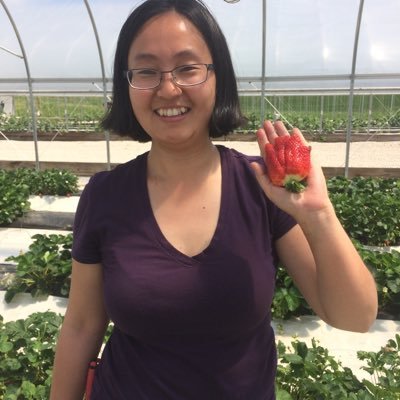
Vegetable Crops Hotline Editor & Clinical Engagement Associate Professor
Department of Horticulture and Landscape Architecture
Area(s) of Interest: Commercial Vegetable and Melon Production
Wenjing Guan's website
Department of Horticulture and Landscape Architecture
Area(s) of Interest: Commercial Vegetable and Melon Production
Wenjing Guan's website
Consumers love cucumbers that are sweet, seedless and have thin skins. They are willing to pay high prices for the long or mini cucumbers sold at grocery stores. These cucumbers are often grown in greenhouses and shipped long distances. It will attract consumers’ attention if greenhouse type cucumbers can be produced locally in high tunnels,…Read more about Are You Interested in Growing Greenhouse Type Cucumbers in High Tunnels, and Targeting for Early Season Production?[Read More]
Strawberry production in Indiana primarily utilizes matted row systems, in which bare root strawberry plants are set in the spring, fruit is first harvested in the second year and plants are maintained for a few seasons. Strawberry production using an annual plasticultural system is popular in the southern states, at where strawberry is planted in…Read more about Would Low Tunnels Provide New Opportunities for Strawberry Production in Indiana?[Read More]
In the past season, we tested performances of eight specialty melons grown under high tunnel, greenhouse, hydroponic, and conventional field systems. The melon varieties we have tested in our trials include Lilliput, Inspire, Sugar Cube, French Orange, Tasty Bites, Escorial, Savor, and Artemis. Many of these melon varieties are Charentais (Cucumis melo var. cantalupensis). A…Read more about Results of Specialty Melon Variety Trials will be Presented at the Indiana Hort Congress[Read More]

Southwest Indiana Melon and Vegetable Growers’ Technical Meeting Date: November 21, 2017 5:00 p.m. to 8:00 p.m. (EST) Location: Southwest Purdue Ag Center (SWPAC), 4369 N. Purdue Road, Vincennes, IN The meeting will start at 5:00 p.m. for board members to discuss topics for the March meeting, which will be held in French Lick, IN. Any member…Read more about Upcoming Events[Read More]
Blackheart of celery is a physiological disorder that causes significant crop loss in major celery production areas. It is characterized by the breakdown of young leaf tissues in the heart of the plants (Figure 1). The affected young tissues turn black, which give it the name “blackheart”. The cause of blackheart of celery is related…Read more about Blackheart of Celery[Read More]
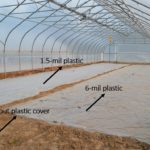
Soil solarization can be used as a tool for soil disinfestation. It is accomplished by covering moist soil with transparent polyethylene film for 4 to 6 weeks in the summer. During this period, soils are heated to temperatures that are lethal to many soil pathogens, nematodes and weed seeds. This summer we conducted a demonstration…Read more about The Update of Soil Solarization in a High Tunnel at SWPAC[Read More]
Beginning Farmer East Regional Workshop Date: Oct. 28, 2017, 8:30 am – 4 pm Location: Randolph County Fairgrounds, 1885 U.S. Route 27, Winchester Attendees for this workshop can learn about: Business planning Pasture management Fruit and vegetable pest management Pastured poultry Greenhouse and high tunnel management Marketing products Purdue Extension experts will be available to…Read more about Upcoming Events[Read More]

Hydroponics Workshop II Date: Sep 8, 2017, 7:30 am – noon. Location: WSLR 116, Horticulture & Landscape Architecture 170 S. University St. Purdue University West Lafayette, IN 47907 Registration: http://tinyurl.com/yb4dnwrh For further questions contact Lori Jolly-Brown, ljollybr@purdue.edu, (765) 494-1296 In this workshop, you will learn about: LED lighting for winter produce in greenhouses Things to know about…Read more about Upcoming Events[Read More]
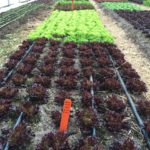
Winter farmers markets are becoming more and more popular. Lettuce is a primary type of vegetables grown for the market. As we are finishing up summer crops, it is a good time to learn and refresh knowledge about lettuce. This article discusses some of the basics of growing lettuce in high tunnels, as well as…Read more about Facts about Lettuce[Read More]