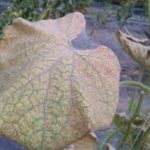
Despite the wet start to the summer that we are experiencing, we have some growers reporting spider mites in field watermelons (Figure 1). This pest is typically associated with hot, dry weather and can be especially problematic in crops grown under protection, such as in high tunnels. Spider mites often move into a field from…Read more about Spider Mites on Cucurbit Crops[Read More]
Laura Ingwell

Entomology
Area(s) of Interest: Vegetable Pest Management, Protected Agriculture, Controlled Environment Agriculture, Urban Agriculture
Area(s) of Interest: Vegetable Pest Management, Protected Agriculture, Controlled Environment Agriculture, Urban Agriculture
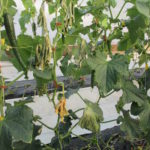
Bacterial wilt is one of the most destructive diseases in high tunnel cucumber production. The reason bacterial wilt is so important is because, like other wilt diseases, it ties up with the entire vascular system of a plant, causing systemic effects (Figure 1). The relatively less important roles that other cucumber diseases play also make…Read more about Bacterial Wilt of Cucumbers Grown in a High Tunnel[Read More]
Entomologists are looking for growers willing to participate in research examining the detection and distribution of striped cucumber beetles. We would like to visit your fields on multiple occasions this year to count the number of cucumber beetles we encounter in your crop. If you grow slicing cucumbers in the field, and are interested in helping to improve…Read more about Entomologists Looking for Cucumber Beetles[Read More]
One can hardly glance at the news recently without noticing an item about the health of bees and other pollinators. We can all agree on the importance pollinators play in the health of our planet and the critical role honey bees and bumble bees play in agriculture. There is no doubt that populations of honey…Read more about Pollinator Health and Foliar Fungicide Use[Read More]
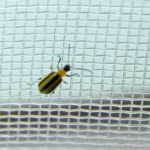
One of the most problematic insect pests that organic vegetable growers have to deal with is the striped cucumber beetle. The insect feeds on all the cucurbit crops, but can be particularly devastating to muskmelons and cucumbers because those two crops are susceptible to bacterial wilt of cucurbits, which is caused by a bacterium carried…Read more about Organic Control Methods for Striped Cucumber Beetles[Read More]
Entomologists are looking for growers willing to participate in research examining the detection and distribution of striped cucumber beetles. We would like to visit your fields on multiple occasions this year to count the number of cucumber beetles we encounter in your crop. If you grow slicing cucumbers in the field, and are interested in helping to improve…Read more about Entomologists Looking for Cucumber Beetles[Read More]
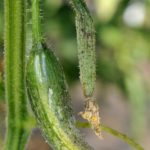
It’s that time of year, where we are prepping high tunnels and getting back into the full swing of production, slowly, here in the Midwest. Many of you have already begun to transplant and may have encountered your first pests on these new crops. Aphids are one that remain a problem in high tunnels, and…Read more about Aphids in High Tunnels[Read More]
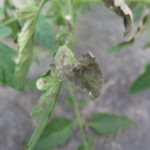
While many virus diseases affect pepper and tomato plants, in the Midwest, the most common virus diseases of these two crops are tomato spotted wilt virus (TSWV) and Impatiens necrotic spot virus (INSV). These diseases are usually observed in greenhouse or high tunnel situations. The two viruses, TSWV and INSV are closely related. In fact,…Read more about Tomato Viruses in Greenhouse[Read More]
It is that time of year again, when the two-spotted spider mites (Tetranychus urticae; TSSM, Figure 1), and other mite species, show up in full force and wreak havoc on fruit and vegetables. These pests are very inconspicuous and often go unnoticed until the resulting damage appears. For TSSM this includes the webbing produced on…Read more about Two-Spotted Spider Mite Control[Read More]
One of the most damaging pests in cucurbit production are cucumber beetles and the bacterial pathogen they transmit (Erwinia trachephila), leading to bacterial wilt. In the recently released video, Dr. Laura Ingwell from Purdue Entomology demonstrates how to install insect exclusion screens on high tunnels. Such screens are effective at excluding cucumber beetles and the pathogen…Read more about Video—Installing High Tunnel Insect Exclusion Screen[Read More]