
Amanda Deering started her Extension/Research appointment July 1, 2015 in a new role as a Clinical Assistant Professor in fresh produce food safety. Amanda grew up on a farm in a small farming community located in the “thumb” of Michigan and joined the Food Science department in the fall of 2013 as a Research Assistant…Read more about Dr. Amanda Deering Appointed to Fresh Produce Safety Extension Faculty Position[Read More]
Crop production, decomposition of organic matter, using ammonium-producing nitrogen fertilizers, and rainfall all lower soil pH. To maintain soil pH in the optimal range (6.5 to 6.8) for vegetable production, periodic application of lime is needed. The primary form of agricultural lime is calcium carbonate (CaCO3). It is the carbonate (CO3^2-) part that brings up…Read more about Liming[Read More]
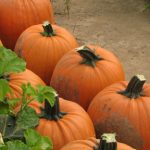
Pumpkin season is here. Keeping up with the best management practices through harvest and storage will help the year wrap up on a good note. The steps below are a reminder of actions that can make a difference. Handle fruit as little as possible. Harvest fully orange and healthy pumpkins. Half-orange pumpkins may turn orange,…Read more about Harvest and Post-harvest Care for High Quality Pumpkins[Read More]
In 2014 and 2015 blackleg-like symptoms were observed in some U.S. potato growing areas. The presence of a bacterium of the species Dickeya was confirmed by PCR testing. Symptoms caused from this pathogen may include leaf wilts and tuber soft rots which may extend internally up the vascular system of the stem. USDA APHIS PPQ…Read more about Blackleg-like Symptoms of Potato[Read More]
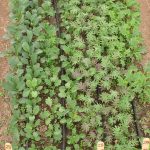
If you grow kale you may be interested in the ‘You Heart Kale’ effort promoted by Indiana’s Farm to School program for this year’s Food Day. The “Kale Toolkit” provided by the Indiana Dept. of Education encourages schools to buy kale from local farmers, plant kale in the school garden, let students taste-test kale recipes,…Read more about Do You Grow Kale?[Read More]
Do you have an idea that might help your farm stay in business for the long run? Be a better place to work or contribute more to the community? Conserve or improve natural resources like soil and water? Reduce use of fossil fuels? The North Central Region Sustainable Agriculture Research and Education program (NCR SARE)…Read more about SARE Farmer Rancher Grants Available for 2016[Read More]
We are planning programs for the Indiana Horticultural Congress and other winter meetings. The best ideas for topics and speakers come from you! Let us know what you want to hear and who you want to hear it from. Call or email with suggestions. Thanks!!

Arthritis and Agriculture. Thursday, September 24, 2015. 12:00 P.M. – 1:00 P.M. EDT. Presenter: Amber D. Wolfe, M.S., from the National AgrAbility project. To participate, register at https://goo.gl/R8Eq1I. You will then receive a confirmation email with the link to participate in the webinar. You will also receive a reminder 24 hours before the webinar begins….Read more about Upcoming Events[Read More]
Purdue University prohibits discrimination against any member of the University community on the basis of race, religion, color, sex, age, national origin or ancestry, genetic information, marital status, parental status, sexual orientation, gender identity and expression, disability, or status as a veteran. This material may be available in alternative formats. 1-888-EXT-INFO Disclaimer: Reference to products in this publication is not intended to be an endorsement to the exclusion of others which may have similar uses. Any person using products listed in this publication assumes full responsibility for their use in accordance with current directions of the manufacturer.