
Welcome to the Vegetable Crops Hotline (VCH), Purdue Extension’s exclusive newsletter for people in the business of growing vegetables. This is our last issue for 2024. I cannot believe that the growing season has gone by that fast. So far this year, the Vegetable Crops Hotline web page has had 174,162 views and 124,515 active…Read more about From The Editor’s Desk[Read More]

Families can create policies without realizing it. A decision made about who can come into the business and when they can come into the business can develop into an expectation of how things will be done from then on, which then becomes a policy. In other words, it is an implicit policy and, as such,…Read more about Policies before Problems: Setting Expectations in Your Family Business[Read More]
Introduction A contingency plan is a course of action to help a business determine how to respond to possible future events. Contingency plans are often referred to as “Plan B”. One of the most common contingency plans used by small businesses relates to how to respond to the departure or absence of key personnel. Contingency…Read more about Contingency Planning for Cash Flow Shortfalls[Read More]
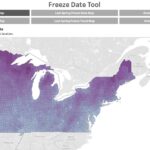
While our daytime highs across the state have been in the upper 70s, our nighttime lows have been in the 40s. This is a great time to start thinking about the timing of the first frost and freeze events of the season when the 7-day average 4-inch soil temperature falls before 50°F, and the viability…Read more about A Chill Is In The Air – Online Tools for Monitoring and Climatology[Read More]

On October 1, the Safe Produce Indiana team welcomed Katheryn Parraga as its newest team member. Katheryn will serve as a Food Safety Research and Outreach Specialist in the Department of Food Science. She will be stationed at the Purdue Extension Food Safety Training Hub in Vincennes. Katheryn received her Ph.D. and master’s degree in…Read more about Safe Produce Indiana Welcomes New Team Member[Read More]

In this episode, we travel to southern Ohio, speaking with one of the largest plasticulture strawberry growers, Mr. Brad Bapst, who shares his journey and insights on growing strawberries. We also hear from Mr. Thomas Harker, who discusses how the strawberry research conducted at the Ohio State University South Centers impacts strawberry production in the…Read more about Strawberry Chat Podcast — Farmer Interview with Brad Bapst: Plasticulture Production in Southern Ohio[Read More]

The growth of local food movements offers small farmers economic opportunities to access attractive, high-value markets for sustainably and locally grown leafy greens. Still, farmers face a myriad of decisions regarding what markets to sell into and which technologies to invest in. Access to costs and financial information can hinder farmers’ ability to set the…Read more about Webinar Series on Financial Tools for Leafy Green Growers[Read More]

Internships are a key part of training our students to be successful. With that in mind, Seed Your Future and NC State University have teamed up to help more students complete internships and help employers offer internships. The information will be used to create the following resources: Best Practices Guide for Creating and Managing Horticultural…Read more about Seed Your Future Horticulture Internship Study[Read More]

Purdue University Extension’s 2024 Rooted & Resilient Homesteading Conference will take place on November 1 and 2 in Kendallville, IN, at the Community Learning Center. Attendees will gain practical skills and knowledge needed to build a thriving, self-sufficient homestead. The hands-on conference will bring together local experts and passionate homesteaders, who will lead workshops on…Read more about Homesteading Conference Will Feature Hands-on Workshops For Experts and Beginners[Read More]
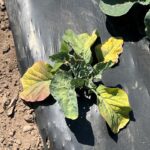
Pathogen and symptoms Wirestem is a disease of cole crops (e.g., broccoli, cauliflower, and cabbage) caused by the soilborne fungus Rhizoctonia solani. This summer, cole growers from the state’s northern region reported that their crops were affected by poorly developed root systems. Upon examination, the plants showed brown stems (figure 1) and narrow roots with…Read more about Management of Wirestem of Cole Crops[Read More]
Purdue University prohibits discrimination against any member of the University community on the basis of race, religion, color, sex, age, national origin or ancestry, genetic information, marital status, parental status, sexual orientation, gender identity and expression, disability, or status as a veteran. This material may be available in alternative formats. 1-888-EXT-INFO Disclaimer: Reference to products in this publication is not intended to be an endorsement to the exclusion of others which may have similar uses. Any person using products listed in this publication assumes full responsibility for their use in accordance with current directions of the manufacturer.