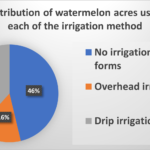
At the 2022 Southwest Indiana Melon and Vegetable Growers Annual Meeting, 17 watermelon farmers and 2 agricultural professionals shared their irrigation and fertilization management practices used for watermelon production in Indiana. These individuals grow or provide services for watermelon acres from less than 50 acres up to 2,000 acres over the past five years. We…Read more about Watermelon Irrigation and Nitrogen Fertilization Methods Commonly Used in Indiana[Read More]
Found 1716 Articles
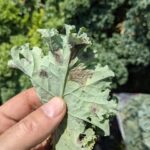
Late last season, I observed Alternaria leaf spot on kale. I want to use this article to review this disease on all brassica crops. This disease also occurs on broccoli, cabbage and other leafy brassicas. Alternaria leafspot usually doesn’t cause yield loss, but can cause unmarketable leaves. The symptoms on leaves usually include round, dark…Read more about Alternaria leaf spot of Brassicas[Read More]
As of March 29, 2022, Reflex herbicide is registered for use on select vegetables in the state of Indiana through an indemnified 24(c) special local needs label. Below we discuss what this means for Indiana vegetable producers and how to access the new label. What crops are included?: Pea (succulent) Bell and non-bell pepper (transplanted)…Read more about Reflex Herbicide Now Registered for Use in Select Indiana Vegetables[Read More]

The Department of Horticulture and Landscape Architecture successfully presented the 2022 Indiana Horticulture Conference Webinar Series between February 1 and March 1, 2022. We delivered 18 educational hours to 785 attendees from 19 States and Puerto Rico. We also had several international attendees. The co-chairs Petrus Langenhoven, Stephen Meyers, Lori Jolly-Brown, and Nathan Deppe would…Read more about IHC 2022 Educational Session Recordings Now Available![Read More]
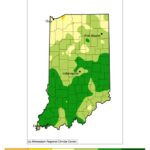
This past winter has been mild across Indiana. With the second La Niña winter in a row, there were expectations that the season would start of mild with some hope that winter would come back fiercely in February and March. While most of the season’s snowfall happened in February, it still was not enough to…Read more about La Niña Sticking Around Longer than Expected[Read More]
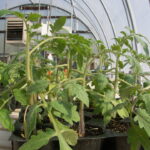
We are getting close to the time of year when I begin to get phone calls about strange symptoms on tomato plants in greenhouses. Too often, the problem is ethylene damage. Read on to find out how to avoid this problem. Tomato plants with ethylene damage often have leaves that are curled down and stems…Read more about Ethylene Damage on Tomato[Read More]
Fertilizer prices have increased dramatically this year. More than ever, we need to think carefully about whether we are using fertilizers wisely. This article will be one of a series to help vegetable growers reevaluate their fertilizer use strategies. One of the lessons I learned in Plant Nutrition class in graduate school was the 4Rs…Read more about Reevaluation of Fertilizer Application Practices[Read More]
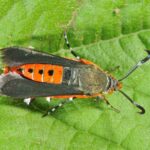
We will continue to host two trapping networks in the 2022 growing season. The historical corn earworm (Figure 1) trapping network will continue. This state-wide trapping and monitoring program for corn earworm is crucial to assist growers with timely management decisions in sweet corn production. The latest trap catch information can be found here. Traps…Read more about Participate in Pest Monitoring to Inform Management[Read More]

We are conducting a survey to learn about your experiences using row covers and your willingness to adopt a new row cover approach known as mesotunnels. Our study is evaluating the use of mesotunnels in the eastern half of the US for control of the full range of pests and diseases on organic production of…Read more about Survey to Gage Willingness to use Row Covers to Manage Pests[Read More]

Rue Genger and Claire Strader at UW-Madison are surveying vegetable growers on use of reduced tillage production methods as part of a larger research study into methods that increase resilience to extreme weather events. The survey will take about 10-15 minutes to complete. Your participation will help us develop better research and education programs for…Read more about Survey for Vegetable Growers on use of Reduced Tillage Production[Read More]
Purdue University prohibits discrimination against any member of the University community on the basis of race, religion, color, sex, age, national origin or ancestry, genetic information, marital status, parental status, sexual orientation, gender identity and expression, disability, or status as a veteran. This material may be available in alternative formats. 1-888-EXT-INFO Disclaimer: Reference to products in this publication is not intended to be an endorsement to the exclusion of others which may have similar uses. Any person using products listed in this publication assumes full responsibility for their use in accordance with current directions of the manufacturer.