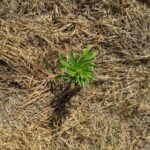
Weed management can succeed or fail based on a number of factors. In the last issue of Vegetable Crops Hotline, we began assessing weed control and the effects of rainfall and soil moisture on weed management. In this article, we’ll take a deeper look into herbicide resistance and tolerance. Herbicide tolerance is the inherent ability…Read more about Take a Moment to Assess Your 2026 Weed Control – Part 2 – Resistance and Tolerance[Read More]
Found 1716 Articles

Dear Valued Vegetable Crops Hotline Readers, Welcome to issue 779 of the Vegetable Crops Hotline newsletter! Our mission remains steadfast: to deliver crucial updates on pest management, production practices, food safety, and marketing opportunities that directly impact your farming operations. What’s Inside This Issue Fall is here, and on many Indiana farms the season is…Read more about From The Editor’s Desk[Read More]

Agritourism: Understanding Benefits, Challenges, and Needs throughout the USA Date & Time October 6, 2:00 PM ET Webinar Description What are the primary concerns and challenges for agritourism operators in the USA — and how are these concerns being addressed? This webinar summarizes key findings from interviews with farmers and a nationwide survey of agritourism…Read more about Findings from the National Study of Agritourism Operators[Read More]

Date and Time September 29, 2026 at 01:00 PM in Indiana (ET) Description Welcome to the American Floral Endowment’s Grow Pro Webinar Series! Throughout this series, our nationally recognized researchers, hosts, and speakers will offer ‘how-to’ advice based on AFE-funded and other research projects to help the industry navigate these ever-changing growing challenges. The webinar…Read more about Gro Pro Webinar Series: Soil Science For Sustainable Cut Flower Production[Read More]
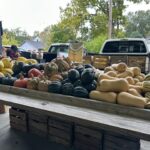
Indiana is one of the nation’s leading pumpkin-producing states. In 2025, growers planted about 7,900 acres, placing Indiana second in the nation for pumpkin production. Growers sell most of the crop in September and October for decoration or home use. Jack-o’-lanterns remain a fall favorite, while specialty pumpkins bring an array of colors, shapes, and…Read more about Diverse Pumpkin and Winter Squash Grown in Indiana[Read More]

EPA Press Release – September 15, 2026 Today, EPA is announcing a new email subscription feature to help pesticide users quickly receive updates from the Bulletins Live! Two system, including notifications about new Pesticide Use Limitation Areas (PULAs) and changes to existing PULAs. EPA developed this feature in direct response to requests from pesticide users…Read more about EPA Launches New Email Subscription Feature to Help Pesticide Users with Endangered Species Act Requirements[Read More]
Do you know local food producers or farmers who want to sell to restaurants, grocery stores, schools, or wholesale distributors? I am letting you know that we’re offering the Market Ready program as an all-day, in-person workshop on October 30th at the Allen County Purdue Extension office (4001 Crescent Avenue, Fort Wayne, Indiana). Participants…Read more about Market Ready Training[Read More]

Please consider joining us at our next MVEG Field Day in Beaverville, IL, to learn about building out farm infrastructure in a hands-on learning format led by farmer Fresh Roberson of Fresher Together, alongside educators from Farmers Rising & the Carey Center for Agrarian Learning at McHenry County College. If you’re planning your farm’s building needs, looking for more resources on equipping your farm,…Read more about Midwest Vegetable Growers (MVEG) Field Day: Building Out Farm Infrastructure[Read More]
Earlier this summer, I wrote a Vegetable Crops Hotline article discussing the loss of Rely® 280 herbicide. That article can be found here: Rely® 280 Herbicide – Going, Going, Gone | Purdue University Vegetable Crops Hotline Rely® 280 was registered for use in cantaloupe, cucumber, summer squash, watermelon, tomato, and pepper in 2023 through two…Read more about Forfeit® 280 Now Registered For Use In Select Vegetable Crops In Indiana[Read More]
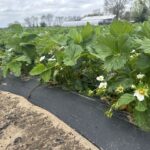
Both plug plants and bare-root plants can be used to establish plasticulture strawberries. Regardless of the type of planting material used, however, proper planting depth is critical. Planting too deep or too shallow can result in poor establishment or even plant death. I have observed both problems during recent farm visits. Planting Strawberry Plugs Too Deep…Read more about Planting Strawberries at the Right Depth[Read More]
Purdue University prohibits discrimination against any member of the University community on the basis of race, religion, color, sex, age, national origin or ancestry, genetic information, marital status, parental status, sexual orientation, gender identity and expression, disability, or status as a veteran. This material may be available in alternative formats. 1-888-EXT-INFO Disclaimer: Reference to products in this publication is not intended to be an endorsement to the exclusion of others which may have similar uses. Any person using products listed in this publication assumes full responsibility for their use in accordance with current directions of the manufacturer.