
The biggest topic seems to be how wet it is and how much more rain Indiana can expect. So far, May has experienced near-normal precipitation throughout the central part of the state with 0.5”-2” in southern and northern regions (Figure 1). Combining this with April’s precipitation, however, means the soil moisture is still 60mm to…Read more about Indiana Climate and Weather Report[Read More]
Climate and Weather

No reason exists to expect drought anytime soon in Indiana, with much of the state remaining rather wet after last weekend’s showers. One good new development exists. The precipitation pattern that has existed since nearly January seems to be becoming a little less predictable, which could mean more periods of drier weather between fronts on…Read more about Indiana Climate and Weather Report[Read More]
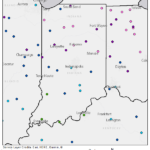
The rain seems to keep falling, barely providing time for things to dry out and start planting! The last few weeks has experienced up to 2” above normal precipitation – particularly for west-central and southern Indiana, which is near the 125th-125th percentile. Warm days seem to be relatively few and far between, causing a slow…Read more about Indiana Climate and Weather Report[Read More]

March has been welcoming Indiana like a lion with below-normal temperatures and a combination of above and below normal precipitation (see figure). Snowfall accumulated across the state ranging from less than 1” in the southwest and northwest to as much as 3-4” in the southeast part of Indiana. This precipitation has caused drought to be…Read more about Indiana Climate and Weather Report[Read More]


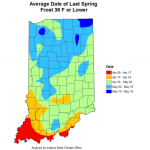
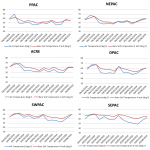
Soil temperatures are critical for seed germination and are closely related to occurrences of some early season soilborne disease and pest problems on vegetable crops. Plant vegetable crops after the soil is warm enough ensure good seed germination and fast crop establishment. The figures below show daily average soil and air temperatures at recorded at…Read more about Soil Temperatures in the Past Two Weeks[Read More]
I have never had as many questions about how to use MELCAST as I did in 2015. The interest in this program is growing both here in Indiana and nationally. Read on to find out how to apply fungicides according to the weather and perhaps save money in the process. MELCAST (MELon disease foreCASTer) is…Read more about MELCAST 2016[Read More]
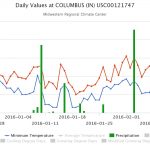
Winter is coming to a close in about a month, and the coldest of the days should be behind us at this point. Here in Indiana, El Nino usually points to a warmer, drier kind of winter. With the past El Nino being considered one of the strongest on record, how much did the warm…Read more about Weather Update Winter 2016[Read More]