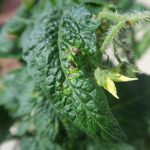
Many Indiana growers may have tomato transplants growing in a greenhouse for field or greenhouse/high tunnel production. The three most likely diseases are bacterial spot, bacterial speck and bacterial canker. This article describes symptoms for these diseases and some management options. While these bacterial diseases thrive in transplant production where plants are often overhead watered, these diseases are…Read more about Tomato Transplant Diseases[Read More]
Greenhouses & High Tunnels
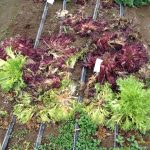
Some of the red and green multi-leaf lettuce plants in Figure 1 are wilted and closer inspection reveals death and soft decay at the crown and well as freeze damage (Figure 2). Getting even closer as in Figure 3 we see white fuzzy mold and find hard black sclerotia 1/8 to ¼ inch across and…Read more about Problems in Overwintered Salad Greens – White Mold and Tip Burn[Read More]


Screening can be an effective measure to exclude unwanted pests from colonizing your crops. In high tunnels, one of the biggest challenges to successfully implementing exclusion screening is managing the unintended side effect: reduced airflow. In spring we are clamoring to get inside the warmth that high tunnels provide, but by mid-summer they can become…Read more about High Tunnel Screening for Insect Pest Management[Read More]

There are several potential benefits of growing grafted tomatoes, particularly for early season tomato production in greenhouses or high tunnels. If you are interested in trying this technique but wondering whether it is possible to graft tomato plants by yourself, a Purdue extension publication, Techniques for Tomato Grafting, (https://extension.purdue.edu/extmedia/HO/HO-260-W.pdf ) provides a step-by-step guideline for small…Read more about Growing Grafted Tomatoes in High Tunnels[Read More]
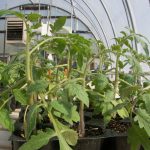
Almost every year, I have a greenhouse tomato grower or two call me about tomato plants that are distorted and don’t seem to be growing right. The problem often turns out to be ethylene damage. This year, I have decided to write an article about it before I get those calls. Tomato plants with ethylene damage…Read more about Ethylene Damage on Tomato Plants[Read More]
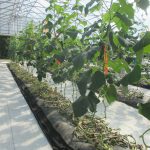
Tomato is considered one of the most profitable crops grown in high tunnels, but continually growing one single crop leads to build-up of diseases. In addition, growers are facing more competition in selling tomatoes in the market. To enhance resilience of high tunnel system and increase access to consumers, crop diversification is important. In this article, instead…Read more about 2016 Cucumber Variety Evaluation in a High Tunnel at Southwest Indiana[Read More]
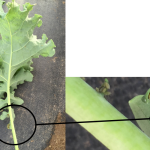
Aphids can be one of the most damaging and hard to control pests during the winter months in high tunnels. The first step to managing aphids is to develop a scouting plan. Aphids reproduce clonally and develop quickly leading to very large population build-up in a short period of time. Therefore scouting is recommended at…Read more about Aphid Management in Winter Green Production in High Tunnels[Read More]
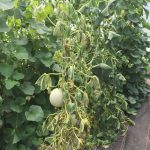
In issue 619 of the Vegetable Crops Hotline newsletter I reported that during April 2016 research focusing on the development of a unique market segment for Indiana melon growers was initiated. The research aims to demonstrate that through the use of high tunnels or greenhouses growers will be able to market melons earlier and increase…Read more about High Tunnel Evaluation of Vertically-Grown Cantaloupe and Galia Melon Varieties[Read More]
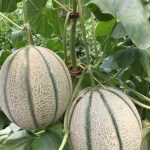
Indiana is a very important player in the domestic melon market. The total acreage planted in Indiana peaked in 1997 at 3,600 acres. In that year the total production was 455,000 cwt with an average income of $16.00 per cwt. The total farm value of production was $7,280,000 ($2,022 per acre). Yield has increased since…Read more about High Tunnel Evaluation of Vertically-Grown Cantaloupe and Galia Melon Varieties and the Development of Best Production Practices for Indiana[Read More]