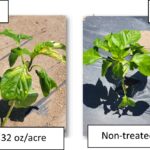
Command® 3ME herbicide recently received a 24C Special Local Need label for use in banana peppers in the state of Indiana (Figure 1). Prior to this registration, Command® 3ME could be applied in the production of other types of bell and non-bell peppers, but not banana peppers. Field research results by the Horticulture Crops Weed…Read more about Command 3ME Now Registered for Use in Banana Peppers in Indiana[Read More]
Herbicide
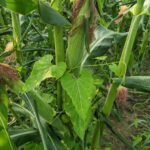
What is it? Honeyvine milkweed (Cynachum laeve) is a perennial, deciduous, vining member of the milkweed family Asclepiadaceae. It is native to the United States and can serve as a host for monarch butterfly larvae. Honeyvine milkweed tends to be more problematic in production systems with reduced or no tillage, including perennial fruits. It can…Read more about Honeyvine Milkweed[Read More]
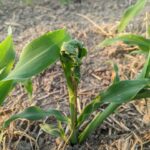
What is buggy whipping? “Buggy whipping” is the term for when leaves in the corn whorl become crinkled and fail to unfurl (Figure 1) properly. It can also be referred to as “twisted whorl syndrome” or “rapid growth syndrome”. Often these crinkled leaves bend toward the ground, resulting in an appearance some liken to a…Read more about Buggy Whipping in Sweet Corn[Read More]
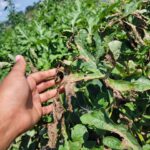
Earlier this year, Rely® 280 was registered for use in transplanted cantaloupe, cucumber, pepper, summer squash, tomato, and watermelon with a supplemental label. The registration allows for the use of Rely® 280 for pre-plant burndown and post-directed applications to row middles. Previously, postemergence burndown and row middle options were limited to glyphosate (Roundup®), carfentrazone (Aim®),…Read more about Rely® 280 Added to Row Middle Weed Control Arsenal in Select Crops[Read More]
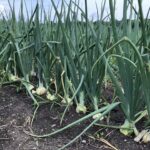
Onions are poor competitors with weeds. Their narrow leaves do not compete well for light, and their shallow root system makes them poor competitors for water. Tight in-row and between-row plant spacing make mechanical weed control, including hand-weeding, difficult. Chemical weed control can be effective and reduce the amount of time required to hand-weed onions….Read more about Even Minimal Herbicide Use Can Reduce Hand-Weeding Time[Read More]

Vegetable growers will begin thinking about fungicide applications in a few weeks. Many growers will have already purchased fungicides for the 2023 season. Where can Indiana vegetable growers go for fungicide information? To find recommended fungicides for vegetable fungicides, one may want first to study the Midwest Vegetable Production Guide. One can find this Guide,…Read more about How to get Fungicide Information for Vegetables[Read More]

What is Optogen®? The active ingredient in Optogen® (Figure 1) is bicyclopyrone. Corn growers may recognize bicyclopyrone as one of the four ingredients in Acuron® herbicide. Bicyclopyrone is a Group 27 herbicide with pre- and post-emergence activity on select weed species. Group 27 herbicides inhibit an enzyme known as “HPPD”, resulting in an inhibition of…Read more about Optogen®- a New Herbicide Available in Select Vegetables and Strawberry[Read More]

Dual Magnum® has had a special local needs (24C) label in Indiana for use on transplanted bell peppers and other vegetables for a number of years. Last week the label was amended to include additional small fruit and vegetable crops, including asparagus. The new 24C label is available on the National Pesticide Information Retrieval System…Read more about Dual Magnum Indiana 24C Label Amended to Include More Crops[Read More]