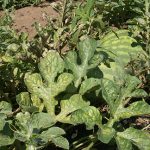
We have received a number of reports of outbreaks of spider mites, primarily in watermelons and in high tunnels. The problems in high tunnels are not unexpected because one of the primary causes of mortality in mite populations is rainfall washing them off the plants and, of course, that is lacking completely in high tunnels….Read more about Spider Mites[Read More]
Insect and Mite Management
Pheromone trap catches for corn earworms continue to be very low. Again, this is a time when growers can save a lot of money and time by monitoring their pheromone traps and not spraying. I harvested untreated sweet corn on Friday, July 31, and had over 98% clean ears and the few that were damaged…Read more about Corn Earworm[Read More]
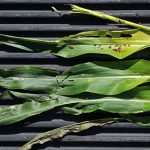
Fall armyworms have completed their annual trek from the Gulf Coast to the Midwest. Fall armyworm larvae will feed on all aboveground parts of the sweet corn plant, during all stages of growth. The damage to the foliage is much more severe than with European corn borer. Larvae will feed from within the whorl of…Read more about Fall Armyworm[Read More]
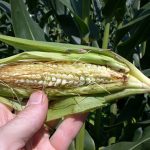
I have seen more green stink bugs this year than at any time in my career. I have no logical explanation for their abundance. It was thought that as the invasive brown marmorated stink bug became established, it might outcompete the native stink bugs such as the green stink bug, causing numbers to decrease. However,…Read more about Green Stink Bug[Read More]
In years past, the European corn borer was the most important pest of sweet corn, as well as being a pest of peppers and other vegetables. Since the advent of Bt field corn, the overall population of corn borers has been dramatically suppressed, so far that we often forget about it being a pest of…Read more about European Corn Borer[Read More]
We are again seeing a lull in pheromone trap catches of corn earworms. However, I caution sweet corn growers to remain vigilant in checking their traps. Populations can increase rapidly, especially if carried north on storm fronts from the Gulf Coast. It is also important to watch the development of the field corn around your…Read more about Corn Earworm[Read More]
Populations of striped cucumber beetles continue to remain high. Muskmelon and cucumber growers should continue to monitor and spray as needed to avoid transmission of the pathogen that causes bacterial wilt of cucurbits. Wilt symptoms are showing up on melons throughout the state at this time, with greater prevalence in the southern counties and less…Read more about Striped Cucumber Beetle[Read More]
I’ve seen some substantial populations of potato leafhoppers recently. Leafhoppers can be a significant pest of a number of vegetable crops, with potato and snap beans being particularly affected. Look for adults flitting off the plants when they are disturbed and for nymphs feeding on the underside of the leaves. It is important not to…Read more about Potato Leafhopper[Read More]
Yellowstriped armyworms continue to cause problems for tomato growers, especially in high tunnels. The populations are often spotty within a field or high tunnel, but can easily reach damaging levels. Most of the insecticides listed in the Midwest Vegetable Production Guide for control of caterpillars on fruiting vegetables (pages 135-6) will control yellowstriped armyworms. If…Read more about Yellowstriped Armyworm[Read More]

Burrs and Cones. Both of the trellises in the Boiler Hopyard have begun flowering and coning. The primary shoots were pruned at the top of the net on the dwarf trellis in order to promote lateral growth. The pruning took place on May 19 and again on May 28. The bines on the dwarf trellis…Read more about Boiler Hopyard Update-July 9, 2015[Read More]