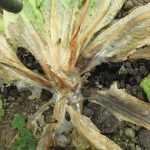
Cool season crops such as lettuce are becoming a more popular crop among Indiana greenhouse/high tunnel growers. One of the most important diseases of lettuce is known as lettuce drop. The symptoms of lettuce drop are often noticed after the thinning stage, early in the crop development. The early symptoms may include browning of leaves. Later…Read more about Lettuce Drop[Read More]
Pests and Pest Management - General
References, associations, organizations, periodicals, pesticides, pesticide safety, pest laws and regulations
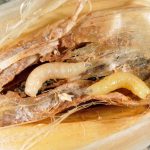
Three species of seed and root maggots attack vegetables in Indiana. The seedcorn maggot (Figure 1) feeds on seeds and seedlings of sweetcorn, cucurbits, lima and snap beans, peas, and other crops. Cabbage maggots can cause serious damage to transplants of cabbage, broccoli, cauliflower, and Brussels sprouts and make the fleshy roots of radishes, turnips,…Read more about Seed and Root Maggots[Read More]
In recent years, many seed companies have begun using the neonicotinoid insecticide thiamethoxam (FarMore) as a seed treatment on cucurbit and other vegetable seeds. Thiamethoxam is a systemic insecticide that moves from the seed coat into the seedling and then moves throughout the plant. Research has shown that these seed treatments provide about 3 weeks…Read more about Neonicotinoid Seed Treatment on Cucurbits[Read More]
One way insects communicate with individuals of the same species is with pheromones. Pheromones are volatile chemicals released by an insect that usually can be detected only by individuals of the same species. There are a number of different types of pheromones, but the most common type is the sex pheromone. Usually the females will…Read more about Pheromones and Pheromone Traps[Read More]
New fungicide – I would like to announce the release of a new fungicide, Orondis® from Syngenta. It is a good product and should help commercial vegetable growers in combating downy mildew of cucurbits, Phytophthora blight of cucurbits, peppers and tomato, Buckeye rot of tomato and late blight of potato and tomato. However, I also want to…Read more about New Fungicide for Vegetables[Read More]

Pinney Purdue Vegetable Field Day and Sweet Corn Sampler. Thursday, August 13, 2015. 4:00 p.m. – 8:00 p.m. CDT. Pinney Purdue Ag Center, 11402 S. County Line Rd., Wanatah, IN. Plot tours include soil health management and disease suppressive soils, tomatoes and peppers in high tunnels, and sweet corn varieties. Private Applicator Recertification (PARP) Credit…Read more about Upcoming Events[Read More]
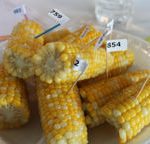
Pinney Purdue Vegetable Field Day and Sweet Corn Sampler. Thursday, August 13, 2015. 4:00 p.m. – 8:00 p.m. CDT. Pinney Purdue Ag Center, 11402 S. County Line Rd., Wanatah, IN. Plot tours include soil health management and disease suppressive soils, tomatoes and peppers in high tunnels, and sweet corn varieties. To register, contact Lori Jolly-Brown,…Read more about Upcoming Events – Pinney Purdue Vegetable Field Day and Sweet Corn Sampler[Read More]
I have received calls about seedcorn maggots in melons and have seen wireworm damage in my research plots in Vincennes. Seedcorn maggots are usually associated with cool weather since the adult flies will not lay their eggs near melons plants when the soil temperature exceeds 70°F. So the cool weather we have had this past…Read more about Seedcorn Maggots and Wireworms[Read More]
Samples in plug trays, as well as unrooted and rooted cuttings, and plants in pots require extra care when they are packaged for submittal to a diagnostic lab. Before you mail the next sample, please take a few minutes to review these suggestions for packaging and submitting samples. This will help preserve the integrity of…Read more about Tips for Submitting Greenhouse Samples to the Purdue Plant and Pest Diagnostic Lab[Read More]
As you all know, many of our vegetable crops are dependent upon pollinators to move pollen from flower to flower. The cucurbits, muskmelons, cucumbers, watermelons, pumpkins, and squash, are completely dependent on insect pollination. Eggplant, okra, lima beans, and peppers will set fruit without pollinators but can have increased yield if pollinators are present. Honey…Read more about Honey Bees and Other Pollinators[Read More]