
Small and medium-sized vegetable farms face unique challenges balancing profitability with sustainable production practices and food safety requirements. To better understand how these farmers navigate complex decision-making processes, the Soil to Market Team—comprising Maria Marshall, Renee Wiatt, Petrus Langenhoven, Betty Feng, and Nathan Shoaf—conducted a comprehensive survey of 500 small and medium-sized farmers across the…Read more about Understanding Farm Decision-Making: Insights from the 2024-2025 Producer Survey[Read More]
Soil Fertility and Fertilizers
Soil nutrients, plant nutrition, soil testing and sampling, soil acidity, soil organic matter, green manures and cover crops, animal manures, fertilizer recommendations, fertilizer materials, etc.
The Indiana Nutrient Management Tool is a new Excel workbook that provides fertilizer and amendment recommendations for vegetables commonly grown in Indiana. Whether for a backyard garden or a market farm, the tool allows the user to create a plan for the amount of products needed to meet the nutrient goals, which can be based…Read more about Indiana Nutrient Management Tool[Read More]

High tunnels are essential for every vegetable grower as they can modify the growing environment for crop earliness, protect the crop against environmental stress, reduce disease and insect pressure, and extend the growing season. Growing in a high tunnel is like growing crops in an irrigated desert. Natural rainfall is unavailable inside your high tunnel,…Read more about Soil and Water Data is Critical for High Tunnel Growers[Read More]
Dr. Betty Feng’s lab within the Department of Food Science at Purdue University is hosting a series of webinars this March and April. The webinars are free to anyone who wishes to participate and will cover various topics, including on-farm food safety and agriculture soil management. Food Safety Plan (accumulative series of webinars) March 21…Read more about Webinar Series – Scaling up Your Small and Medium-sized Farm[Read More]

Recent price increases and supply chain shortages for fertilizers, chemicals, and energy have impacted farm profitability and viability. As a result, many Indiana farmers are interested in alternative and more sustainable approaches to maintaining crop productivity and building soil health, such as applying composts to their soils. Applying compost to the soil is common in…Read more about Are You Thinking of Applying Compost to Your Soils?[Read More]

We discussed wetting patterns in drip irrigation in a previous article. The take home message is drip irrigation applies water to only a portion of the soil. Uneven water distribution in the soil profile is not a problem as long as enough water is applied to the crop. However, the water wetting pattern might influence…Read more about Water Affects Efficacy of Soil-Incorporated Fertilizers and Amendments[Read More]
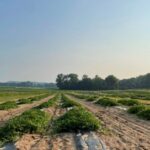
A large proportion of watermelon acres in Indiana are not currently using drip irrigation. Farmers may choose not to use drip irrigation because precipitation is usually abundant in most years for watermelon production. There is a desire to reduce costs and/or fear that over-irrigation may increase the risk of mature watermelon vine decline, a disease…Read more about Research Update on Nitrogen Management in Non-Irrigated Watermelon Production[Read More]
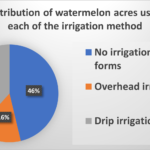
At the 2022 Southwest Indiana Melon and Vegetable Growers Annual Meeting, 17 watermelon farmers and 2 agricultural professionals shared their irrigation and fertilization management practices used for watermelon production in Indiana. These individuals grow or provide services for watermelon acres from less than 50 acres up to 2,000 acres over the past five years. We…Read more about Watermelon Irrigation and Nitrogen Fertilization Methods Commonly Used in Indiana[Read More]
Fertilizer prices have increased dramatically this year. More than ever, we need to think carefully about whether we are using fertilizers wisely. This article will be one of a series to help vegetable growers reevaluate their fertilizer use strategies. One of the lessons I learned in Plant Nutrition class in graduate school was the 4Rs…Read more about Reevaluation of Fertilizer Application Practices[Read More]
High rainfall amounts lead to loss of nitrogen from the soil. Sometimes the loss is great enough that a crop will benefit from additional nitrogen application. This article will describe how nitrogen is lost and factors to consider in deciding whether to apply extra nitrogen. There are two main ways nitrogen is lost from wet…Read more about Nitrogen Loss from Wet Soils[Read More]