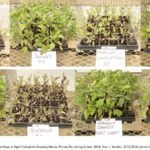
Getting seedlings off to a good start begins with a good growing medium for transplants. Growing media for organic production must meet the guidelines set out by the National Organic Standards Board, including not containing any synthetic substances (unless they have been approved for that use) or any prohibited materials. A number of products meet…Read more about How Do Growing Media for Organic Production Compare?[Read More]
Petrus Langenhoven

Horticulture and Hydroponic Crop Specialist
Department of Horticulture and Landscape Architecture
Petrus Langenhoven's website
Department of Horticulture and Landscape Architecture
Petrus Langenhoven's website
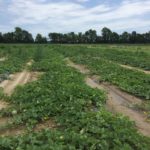
While Indiana remains a key player in the domestic cantaloupe market, commercial field production is limited to a few counties. The total acreage planted in Indiana peaked in 1997 at 3,600 acres with a total production of 455,000 cwt and an average income of $16 per cwt (USDA ESMIS, 2015). Indiana cantaloupe growers have lost…Read more about 2017 Field Evaluation of Specialty Cantaloupe and Charentais Melon Varieties[Read More]
In the past season, we tested performances of eight specialty melons grown under high tunnel, greenhouse, hydroponic, and conventional field systems. The melon varieties we have tested in our trials include Lilliput, Inspire, Sugar Cube, French Orange, Tasty Bites, Escorial, Savor, and Artemis. Many of these melon varieties are Charentais (Cucumis melo var. cantalupensis). A…Read more about Results of Specialty Melon Variety Trials will be Presented at the Indiana Hort Congress[Read More]
Developing and mixing your nutrient solution is one of several very important steps in the production process. Mistakes are easily made when fertilizers are mixed. Not only does this have a cost implication, but also it can have severe consequences on production and therefore revenue. In the previous article Taking Care of Plant Nutrition in…Read more about Taking Care of Plant Nutrition in Your High Tunnel – Fertilizer and Nutrient Solution Mixing Tips[Read More]

Every grower will have to do some basic calculations when mixing a nutrient solution. Understanding some of the calculations will help you to apply the correct concentration of a nutrient or determine the concentrations of a combination of nutrients applied. In the previous article Taking Care of Plant Nutrition in Your High Tunnel-Water Hardness and…Read more about Taking Care of Plant Nutrition in Your High Tunnel – Water Soluble Fertilizer Calculations[Read More]
It is essential, especially in hydroponics to start with a laboratory analysis of your source water. It is also important to do follow-up analysis throughout the year. Water quality can change especially where the water source is a well or a pond. In the article Taking Care of Plant Nutrition in Your High Tunnel-Water Alkalinity (Issue…Read more about Taking Care of Plant Nutrition in Your High Tunnel – Water Hardness and the Removal of Unwanted Ions[Read More]
In the past I have had many conversations with growers about plant nutrition in their high tunnels. A good plant nutrient management plan is an integral part of making a success of the crop you are growing. Plant nutrition is important to grow a strong and healthy seedling, the first step of a successful crop….Read more about Taking Care of Plant Nutrition in Your High Tunnel – Water Alkalinity[Read More]

In issue 619 and 620 of the Vegetable Crops Hotline newsletter I gave you a brief background of the materials used and methods followed during the variety evaluation. I also discussed some of the challenges we encountered while doing the trial work. The varieties evaluated included: Entry # Variety 1 Sephia (Galia type) 2 Tirreno…Read more about High Tunnel Evaluation of Vertically-Grown Cantaloupe and Galia Melon Varieties[Read More]
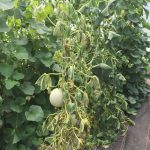
In issue 619 of the Vegetable Crops Hotline newsletter I reported that during April 2016 research focusing on the development of a unique market segment for Indiana melon growers was initiated. The research aims to demonstrate that through the use of high tunnels or greenhouses growers will be able to market melons earlier and increase…Read more about High Tunnel Evaluation of Vertically-Grown Cantaloupe and Galia Melon Varieties[Read More]

Indiana is a very important player in the domestic melon market. The total acreage planted in Indiana peaked in 1997 at 3,600 acres. In that year the total production was 455,000 cwt with an average income of $16.00 per cwt. The total farm value of production was $7,280,000 ($2,022 per acre). Yield has increased since…Read more about High Tunnel Evaluation of Vertically-Grown Cantaloupe and Galia Melon Varieties and the Development of Best Production Practices for Indiana[Read More]