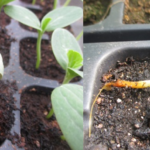
Producing healthy transplants is a critical step for a successful growing season. Choosing the proper growing media is an important first step. Supported by a USDA Specialty Crops Block Grant through the Indiana State Department of Agriculture, researchers from Purdue have been evaluating different organic growing media with and without adding supplemental organic fertilizers for…Read more about Abnormal Transplant Symptoms Might be Caused by Poor Media[Read More]
Petrus Langenhoven

Horticulture and Hydroponic Crop Specialist
Department of Horticulture and Landscape Architecture
Petrus Langenhoven's website
Department of Horticulture and Landscape Architecture
Petrus Langenhoven's website
On April 1, 2019, Dr. Hazel Wetzstein, Head of the Department of Horticulture and Landscape Architecture, announced a change in leadership for the Indiana Horticulture Congress. “I am pleased to announce that Petrus Langenhoven and Kyle Daniel have agreed to serve as Co-Chairs for the Indiana Horticulture Congress, effective immediately. They bring a wealth of…Read more about New Leadership Appointed for the Indiana Horticulture Congress[Read More]
Basic Aspects of High Tunnel Soil Fertility Management – (Petrus Langenhoven, plangenh@purdue.edu, 765-496-7955) – Spring has arrived! Every high tunnel grower is now thinking of planting summer vegetable crops in high tunnels or has already planted. Whichever scenario applies to you, I hope that you have submitted soil samples or are in the process of…Read more about Basic Aspects of High Tunnel Soil Fertility Management[Read More]
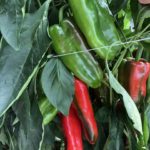
Sweet colored peppers can yield well in the protected conditions of an unheated high tunnel, but information is lacking about which varieties are adapted for high tunnel production and their performance. During 2018 we evaluated ten sweet pepper varieties at the Purdue Student Farm, West Lafayette, Indiana (Table 1). How was the evaluation conducted? The…Read more about Colored Sweet Pepper Varieties for High Tunnel Production[Read More]
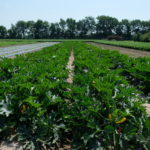
Gowers always want to know which variety is the most suitable one for their farming location and market. I do understand the frustration of growers when looking online at all the varieties being sold by different vendors. There are a plethora of varieties available that have different fruit types and growth habits. Characteristics like potential…Read more about Yellow and Green Zucchini Varieties for the Local Market[Read More]
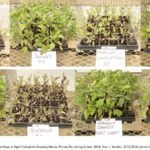
Getting seedlings off to a good start begins with a good growing medium for transplants. Growing media for organic production must meet the guidelines set out by the National Organic Standards Board, including not containing any synthetic substances (unless they have been approved for that use) or any prohibited materials. A number of products meet…Read more about How Do Growing Media for Organic Production Compare?[Read More]
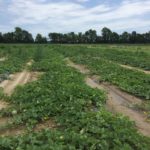
While Indiana remains a key player in the domestic cantaloupe market, commercial field production is limited to a few counties. The total acreage planted in Indiana peaked in 1997 at 3,600 acres with a total production of 455,000 cwt and an average income of $16 per cwt (USDA ESMIS, 2015). Indiana cantaloupe growers have lost…Read more about 2017 Field Evaluation of Specialty Cantaloupe and Charentais Melon Varieties[Read More]
In the past season, we tested performances of eight specialty melons grown under high tunnel, greenhouse, hydroponic, and conventional field systems. The melon varieties we have tested in our trials include Lilliput, Inspire, Sugar Cube, French Orange, Tasty Bites, Escorial, Savor, and Artemis. Many of these melon varieties are Charentais (Cucumis melo var. cantalupensis). A…Read more about Results of Specialty Melon Variety Trials will be Presented at the Indiana Hort Congress[Read More]
Developing and mixing your nutrient solution is one of several very important steps in the production process. Mistakes are easily made when fertilizers are mixed. Not only does this have a cost implication, but also it can have severe consequences on production and therefore revenue. In the previous article Taking Care of Plant Nutrition in…Read more about Taking Care of Plant Nutrition in Your High Tunnel – Fertilizer and Nutrient Solution Mixing Tips[Read More]

Every grower will have to do some basic calculations when mixing a nutrient solution. Understanding some of the calculations will help you to apply the correct concentration of a nutrient or determine the concentrations of a combination of nutrients applied. In the previous article Taking Care of Plant Nutrition in Your High Tunnel-Water Hardness and…Read more about Taking Care of Plant Nutrition in Your High Tunnel – Water Soluble Fertilizer Calculations[Read More]