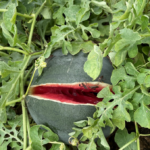
We received more than 8 inches of rain since the evening of July 24 at Southwest Purdue Ag Center. This article discusses a few plant physiological disorders we observed after the heavy rains. We noticed a large percentage of cracked fruit on tomatoes at the stem end (Figure 1). Fruit cracking is a physiological disorder…Read more about Physiological Disorders after Heavy Rains[Read More]
This is the fourth article in a series that describes the three primary bacterial diseases of tomato: bacterial canker, bacterial speck and bacterial spot. This article is a general summary of management options for these diseases. All three of these diseases may be seed borne and brought into to field situation on transplants. It is…Read more about General Management Options for Bacterial Diseases of Tomato[Read More]
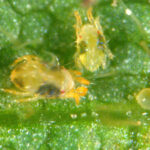
Two-spotted spider mites (TSSM) are one of the most common mite pests occurring throughout the world. They are known to feed on over 300 plant species, including tomatoes, cucumbers, melons, grapes, apples, and a variety of common flower and weed species. They disperse by walking or floating on the wind currents. Early infestations can be…Read more about Mite Management[Read More]
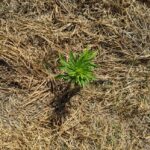
Try as we might, it seems that no weed management program controls 100% of the weeds in a field. Inadequate or excessive rainfall can limit the success of preemergence herbicides. Less-than-ideal soil moisture can result in unsatisfactory in-season cultivation. Even when we have effective herbicide options, late emerging weeds often cannot be treated within the…Read more about Going Rogue[Read More]
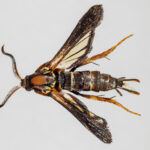
This is my second year coordinating a bucket trap network to monitor squash vine borers. And, for a second year in a row we are witnessing some interesting organisms in the trap. The first of which is the unfortunate capture of pollinators. This is nearly unavoidable because of the color attraction; yellow mimics flowers, but…Read more about Squash Vine Borer (SVB) Trapping Bycatch[Read More]
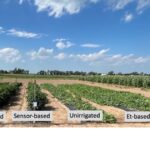
At Pinney Purdue (PPAC) 2.19 inches of rain fell July 12 through July 26. The potential evapotranspiration (PET) over the period was 2.67 inches. Estimates for water use by the crops are somewhat lower than potential evapotranspiration. For tomatoes, estimated water use was 2.03 inches, and for watermelons, 1.54 inches. Dry periods between heavy rains…Read more about Irrigation Demonstration Update July 27, 2022, Pinney Purdue Ag Center[Read More]
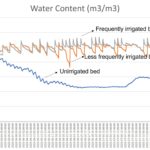
At Southwest Purdue Ag Center (SWPAC), more than 10 inches of rain fell since July 7; over 8 inches happened since the evening of July 24. Soil water content on the unirrigated tomato/pepper/eggplant bed (12’’ under plastic mulch) increased from 10% (early July) to about 15% after 3 inches of rain on July 7-9. The…Read more about Irrigation Demonstration Update July 27, 2022 Southwest Purdue Ag Center[Read More]

August Strawberry Chat will be about plasticulture production. Our guests are Brad Bergefurd, a former horticulture specialist at The Ohio State University; Calvin Beasley from Beasley Orchard in Danville, IN, and Danny VanMeter from VanMeter Family Farm in Clarkson, KY. The live session is on Aug 10, 12:00-1:00 pm EST. If you are interested in…Read more about Strawberry Chat Aug. 10 Plasticulture Production[Read More]
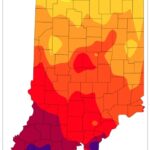
Rainfall over the past few weeks has helped to improve drought conditions across much of Indiana. Northeastern and southwestern Indiana have benefited the most, removing previous Abnormally Dry or Moderate Drought status from the U.S. Drought Monitor (USDM; Figure 1). Unfortunately, west-central Indiana and near the greater Cincinnati area have been missing out from most…Read more about Drought Improving … for now[Read More]

OISC Clean Sweep Pesticide Disposal Program is a great opportunity to legally dispose of unwanted pesticide products at little or no cost. The 2022 Clean Sweep Pesticide Disposal Program sponsored by the Office of the Indiana State Chemist (OISC) offers statewide pesticide collection sites in Wabash, Bartholomew, Daviess, Randolph, Porter and Hendricks counties in August. …Read more about OISC Clean Sweep Pesticide Disposal Program[Read More]
Purdue University prohibits discrimination against any member of the University community on the basis of race, religion, color, sex, age, national origin or ancestry, genetic information, marital status, parental status, sexual orientation, gender identity and expression, disability, or status as a veteran. This material may be available in alternative formats. 1-888-EXT-INFO Disclaimer: Reference to products in this publication is not intended to be an endorsement to the exclusion of others which may have similar uses. Any person using products listed in this publication assumes full responsibility for their use in accordance with current directions of the manufacturer.