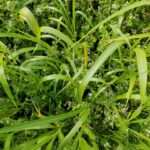
What can a relative of broom corn do for you on a vegetable farm? Build biomass while beating the heat! Sorghum-sudangrass (Sorghum x drummondii) (Figure 1) is a summer-loving hybrid cover crop species. Its parents are wild sorghum, native to sub-Saharan Africa, and domesticated sorghum, known as broom corn or milo in our part of…Read more about Cover Crop Species Spotlight – Sorghum Sudangrass[Read More]
Found 1728 Articles
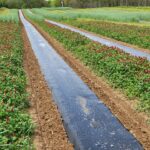
In watermelon systems in Indiana, cover crops are extensively used with the primary function of acting as a wind-break to protect the seedlings when they are planted in May. Due to the nature of the landscape and the soil type (e.g., open areas with sandy soils), seedlings are exposed to physical damage caused by sandblasting….Read more about Enhancing Insect Pest and Pollinator Management with Flowering Cover Crops[Read More]
Join eOrganic for 4 webinars on the findings of the biocontrol project in April and May 2023! Register at the links below for the May 18 and May 24 webinars! Recordings will be posted here and on the eOrganic YouTube channel! eOrganic Webinars Date Webinar Presenters April 26, 2023 Marketing Value-added Grains for Local and…Read more about eOrganic Webinars on Predatory Mites and Whitefly[Read More]

The USDA published this news release in Indiana on May 3, 2023. Indiana NRCS Announces First Sign-up Period for Organic Transition Initiative USDA’s Natural Resources Conservation Service’s (NRCS) Acting State Conservationist, David Doctorian, announced today that Indiana is accepting applications for the first round of Organic Transition Initiative (OTI) funding through June 15. The initiative…Read more about Natural Resources and Conservation Service (NRCS) News[Read More]

Welcome to the Vegetable Crops Hotline (VCH), Purdue Extension’s exclusive newsletter for people in the business of growing vegetables. This is, again, a bumper issue. It seems we can look forward to warmer days. Farm activity will increase in the coming weeks as conditions become more favorable for the planting of tender vegetable crops. Remember,…Read more about From the Editor’s Desk[Read More]
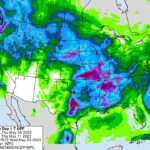
It is May, the sun is shining, of course the wind is blowing, and the weather forecast is calling for warmer temperatures. Things are looking up from here. Despite the warm start and cool end to April, the preliminary statewide average temperature ran 1.2°F above normal (Figure 1). The largest temperature departures occurred in northern…Read more about Warmer Temperatures on the Way[Read More]
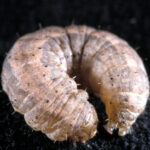
Each year we get several reports of seedlings being cut at or near the base of the plant/soil surface. The critter who gets the blame most often is cutworms. And that makes sense because the damage is in the name. However, with closer inspection, it seems that the blame can often be misplaced. There are…Read more about Cut Seedlings and the Potential Culprits[Read More]
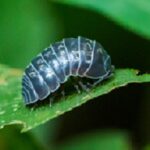
Background Pillbugs, roly-polys, and potato bugs are the dominant common names for the isopod genus Armadillidium spp. As the scientific name suggests, these little critters resemble mini armadillos but are, in fact, crustaceans that live on land (Figure 1). Therefore, they are more closely related to lobsters, crabs, and shrimp than insects. Pillbugs are important…Read more about Are Pillbugs Pests? How Can They be Managed?[Read More]
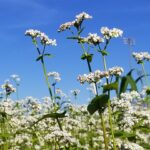
Buckwheat (Fagopyrum esculentum) has been cultivated for thousands of years (Figure 1). Not at all related to wheat, buckwheat gets its common name from an old Dutch word that means “beech wheat” due to the seed’s resemblance to a beech nut. A member of the smartweed family, buckwheat is a cousin to familiar species like…Read more about Cover Crop Species Spotlight – Buckwheat[Read More]
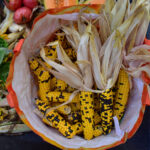
Heritage Corn: Planting, Challenges, and Educating from the Family Plot Perspective This winter, Northern Indiana farmer, Zuleyja Prieto, finished her SARE farmer rancher grant that focused on planting and preserving heritage corn varieties (Figure 1). Prieto worked with her family and local farmer collaborators on heritage corn in a family plot for two years. A…Read more about Sustainable Agriculture Research and Education (SARE) News[Read More]
Purdue University prohibits discrimination against any member of the University community on the basis of race, religion, color, sex, age, national origin or ancestry, genetic information, marital status, parental status, sexual orientation, gender identity and expression, disability, or status as a veteran. This material may be available in alternative formats. 1-888-EXT-INFO Disclaimer: Reference to products in this publication is not intended to be an endorsement to the exclusion of others which may have similar uses. Any person using products listed in this publication assumes full responsibility for their use in accordance with current directions of the manufacturer.