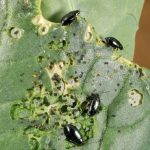
Many of our vegetable crops are subject to feeding by one or more species of flea beetles (Figure 1). Flea beetles get their name because they have enlarged hind legs that allow them to jump like fleas. Most species are quite small, and with their ability to jump, often seem to just disappear when disturbed….Read more about Flea Beetles[Read More]
Greens and Salad Crops
Do you grow spinach or lettuce in Northwest Indiana? Drs. Lindsay Gielda and Scott Bates in the Dept. of Biological Sciences at Purdue University Northwest would like to collect a few samples from your farm. They are studying how the endosymbiotic fungi that naturally live on spinach and lettuce might inhibit the growth of pathogenic E. coli strains…Read more about Researchers Looking for Spinach and Lettuce from NW Indiana[Read More]
U.S. EPA approved a supplemental label to use Kerb SC® herbicide in leaf lettuce. Kerb® is a selective herbicide for control of certain annual grasses and broadleaf weeds. It can be used in direct seeded or transplanted leaf lettuce. Application can be made before or after planting but must be made prior to weed emergence….Read more about Kerb SC Labeled for Leaf Lettuce[Read More]
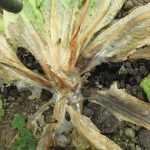
Cool season crops such as lettuce are becoming a more popular crop among Indiana greenhouse/high tunnel growers. One of the most important diseases of lettuce is known as lettuce drop. The symptoms of lettuce drop are often noticed after the thinning stage, early in the crop development. The early symptoms may include browning of leaves. Later…Read more about Lettuce Drop[Read More]
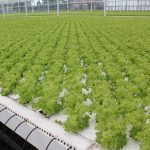
Travelling through Indiana last summer, I realized that many growers plant their crops in soil inside their high tunnels or greenhouses. Soilless production offers different benefits and challenges. This is the first article in a series focusing on soilless crop production in high tunnels and greenhouses. Today we are discussing Hydroponics. What is Hydroponics? The…Read more about Opportunities in Hydroponics[Read More]
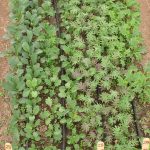
If you grow kale you may be interested in the ‘You Heart Kale’ effort promoted by Indiana’s Farm to School program for this year’s Food Day. The “Kale Toolkit” provided by the Indiana Dept. of Education encourages schools to buy kale from local farmers, plant kale in the school garden, let students taste-test kale recipes,…Read more about Do You Grow Kale?[Read More]
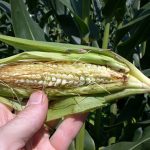
I have seen more green stink bugs this year than at any time in my career. I have no logical explanation for their abundance. It was thought that as the invasive brown marmorated stink bug became established, it might outcompete the native stink bugs such as the green stink bug, causing numbers to decrease. However,…Read more about Green Stink Bug[Read More]
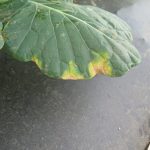
Cabbage is the crop most often affected by black rot, however, other crucifers such as broccoli, cauliflower, mustard, kohlrabi or Brussels sprouts may be affected. The first symptom one is likely to notice is a ‘V’ shaped lesion on the margin of the leaf (Figure 1). However, the symptom on Brussels sprouts observed recently are irregular, jagged…Read more about Black Rot of Crucifers[Read More]