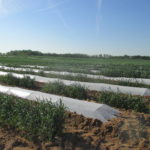
Two types of injury on young warm-season vegetable plants are caused by low temperatures: frost/freezing injury and chilling injury. Frost/freezing injury occurs when temperatures drop below 32°F. Ice formation in plant tissues cut cell membranes. When the tissue thaws, the damage results in fluids leaking from the cell, causing water soaked damage. Frost/freezing injury is…Read more about Protect Early Planted Warm-Season Vegetables from Low Temperatures[Read More]
Solanaceous Crops
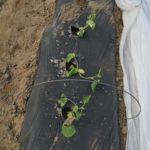
Chilling injury occurs when temperatures are above 32°F and below 55°F. The plant tissue becomes weakened that leads to cellular dysfunction. The most noticeable visual symptom of chilling injury is leaf and hypocotyl wilt (Figure 1). This is caused by the rapid decline in the ability of roots to absorb and transport water. It also…Read more about Chilling Injury on Young Warm-season Vegetable Plants[Read More]
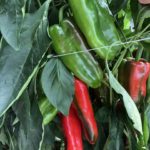
Sweet colored peppers can yield well in the protected conditions of an unheated high tunnel, but information is lacking about which varieties are adapted for high tunnel production and their performance. During 2018 we evaluated ten sweet pepper varieties at the Purdue Student Farm, West Lafayette, Indiana (Table 1). How was the evaluation conducted? The…Read more about Colored Sweet Pepper Varieties for High Tunnel Production[Read More]

Tomato and Cucumber growers who are interested in grafting tomato and cucumber plants by themselves may find this information helpful. Step-By-Step instruction of how to graft tomato plants is available from Purdue Extension publication Vegetable Grafting: Techniques for Tomato Grafting https://mdc.itap.purdue.edu/item.asp?Item_Number=HO-260-W as well as a Purdue Extension video https://www.youtube.com/watch?v=7Ufx66Isf88 A cucumber grafting instruction was also…Read more about Learn How to Graft Cucumber and Tomato Plants[Read More]

High tunnels, though relatively new, have gained popularity over the past decade among specialty crop growers who want to extend their growing season. However, these environments can make crops vulnerable to the development of soil-borne diseases that reduce yield. This is particularly true for tomatoes, which are the most commonly grown high tunnel crop and…Read more about Dealing with Yield Decline in High Tunnel Tomatoes[Read More]
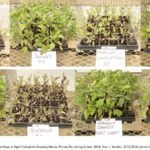
Getting seedlings off to a good start begins with a good growing medium for transplants. Growing media for organic production must meet the guidelines set out by the National Organic Standards Board, including not containing any synthetic substances (unless they have been approved for that use) or any prohibited materials. A number of products meet…Read more about How Do Growing Media for Organic Production Compare?[Read More]
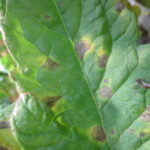
The following two articles describe two vegetable diseases new to Indiana that were recorded this past season. While neither of the disease reports are from severe outbreaks, it might be a good idea to become familiar with what may become a new disease situation. Target spot of tomato was identified from a tomato plant growing in…Read more about New Disease Report – Target Spot of Tomato[Read More]
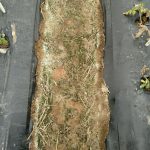
I visited a few high tunnels around the state recently and used a hand-held soil electrical conductivity (EC) meter to test soil salinity levels inside of the structures. Although the hand-held EC meter may not give ratings as accurate as a soil test lab could provide, I had comparative ratings from several farms. Interestingly, by talking…Read more about High Salinity Levels May Affect Tomato Production in High Tunnels[Read More]
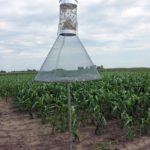
Corn earworm moth numbers have been relatively low this season until recently, as numbers have exploded in pheromone traps. These moths will lay their eggs on numerous crops, with late-market sweet corn being particularly vulnerable at this time. Tomato and pepper growers should also be aware of the potential for earworm (also called fruitworm) damage,…Read more about Corn Earworm Late Moth Flight Quite Impressive[Read More]
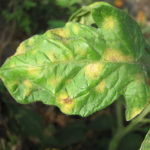
In the fall of 2015, I wrote an article for the Hotline about Cercospora leaf mold of tomato since this disease had been observed twice in the 2015 season. I wrote that Cercospora leaf mold was normally a subtropical disease. There have been several observations of Cercospora leaf mold on tomato in Indiana this year….Read more about Tomato Leaf Mold Diseases[Read More]