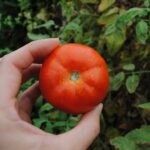
To regular readers of the Vegetable Crop Hotline, it may seem that we include an article about tomato spotted wilt virus every year out of custom. However, we have again observed large outbreaks of this disease. Please read the article below carefully if you raise tomato transplants or mature tomatoes in a greenhouse or high…Read more about Tips for Managing Tomato Spotted Wilt Virus (TSWV)[Read More]
Solanaceous Crops
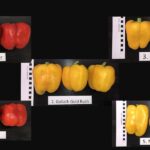
There is still time to select sweet pepper varieties for this summer. During the 2020 growing season, I evaluated a new batch of five sweet bell pepper varieties. I also evaluated five sweet tapered pepper varieties for a second season. All varieties (Table 1, Figures 1 & 2) were grown in a high tunnel at…Read more about Have You Selected Your Sweet Pepper Varieties Yet?[Read More]
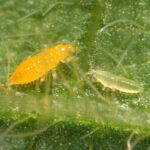
Tomato spotted wilt virus (TSWV) is a plant disease caused by a virus that infects more than 1,000 species of plants, including ornamentals and vegetables. Visual symptoms of TSWV vary depending on the plant that is infected, but general characteristics include yellow or brown ringspots on fruit and small, dark-colored ringspots on foliage that may…Read more about Tips for Managing Tomato Spotted Wilt Virus (TSWV)[Read More]
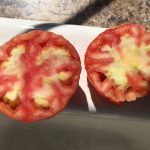
A common problem tomato growers face this time of year are fruit defects caused by high temperatures. Heat stress on tomatoes can lead to reduced yield and abnormal fruit development. The common physiological disorders on fruit development under heat stress include yellow shoulder, internal white tissue, and blotchy ripening. In a recent presentation by Gordon…Read more about Tomato Varieties Differ in Susceptibility to Internal White Tissue Disorder[Read More]
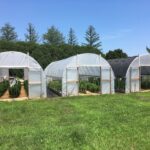
On hot days in the summer, high tunnel growers may wonder whether to place shadecloth on high tunnels. Considering excessive heat inside the structures that may lead to plant stress, blossom drop and unmarketable fruit, there is a rational for doing it. However, it is important to realize the limitations of placing shadecloth on high…Read more about Using Shadecloth on High Tunnels for Tomato and Colored Bell Pepper Production[Read More]

We received calls recently reporting observations of leaf curling on tomatoes. This article discusses factors that may cause tomato leaf curling. In a similar way as other vegetables, hot and dry conditions may cause leaf curling on tomatoes. In late spring and early summer, plants that are actively growing and developing fruit have a high…Read more about Tomato Leaf Curling[Read More]
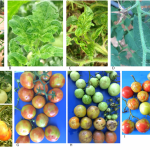
Tomato brown rugose fruit virus (ToBRFV) is making headlines and eliciting USDA action. Growers need to learn more about ToBRFV biology, symptoms and control. Tomato brown rugose fruit virus (ToBRFV) is a newly identified virus affecting tomato, pepper and possibly their relatives. ToBRFV first appeared in Israel in 2014. Since then, it has shown up…Read more about Tomato Brown Rugose Fruit Virus (ToBRFV): A New Concern for Tomato and Pepper Producers[Read More]
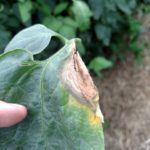
Botrytis gray mold can cause disease on many different host plants, enabling the fungus to easily survive and disperse between crops. Host crops include flowers such as geraniums, vegetables such as green beans and fruit such as strawberries. The disease is favored by relatively cool temperatures and high humidity. We recently observed botrytis gray mold…Read more about Botrytis Gray Mold[Read More]
In creating the new format of the Midwest Vegetable Production Guide for Commercial Growers 2020 (ID-56), I inadvertently left out the portion of the fruiting vegetable section that deals with Phytophthora blight of pepper. The new format allows me to update items easily; I have now added information on this important disease. Go to mwveguide.org…Read more about Phytophthora Blight of Pepper in Midwest Vegetable Production Guide[Read More]
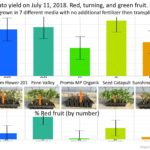
We know from published research that the health and quality of a vegetable transplant affects how it will establish, grow, and yield in the field. Our recent work comparing tomato and cucurbit seedling growth in different organic growing media and with and without added fertilizer has provided some good examples of this. See Vegetable Crop…Read more about Vegetable Transplant Care Translates into Early Yield Differences[Read More]