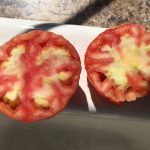
A common problem tomato growers face this time of year are fruit defects caused by high temperatures. Heat stress on tomatoes can lead to reduced yield and abnormal fruit development. The common physiological disorders on fruit development under heat stress include yellow shoulder, internal white tissue, and blotchy ripening. In a recent presentation by Gordon…Read more about Tomato Varieties Differ in Susceptibility to Internal White Tissue Disorder[Read More]
Tomato

We received calls recently reporting observations of leaf curling on tomatoes. This article discusses factors that may cause tomato leaf curling. In a similar way as other vegetables, hot and dry conditions may cause leaf curling on tomatoes. In late spring and early summer, plants that are actively growing and developing fruit have a high…Read more about Tomato Leaf Curling[Read More]
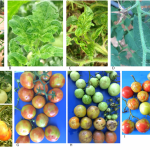
Tomato brown rugose fruit virus (ToBRFV) is making headlines and eliciting USDA action. Growers need to learn more about ToBRFV biology, symptoms and control. Tomato brown rugose fruit virus (ToBRFV) is a newly identified virus affecting tomato, pepper and possibly their relatives. ToBRFV first appeared in Israel in 2014. Since then, it has shown up…Read more about Tomato Brown Rugose Fruit Virus (ToBRFV): A New Concern for Tomato and Pepper Producers[Read More]
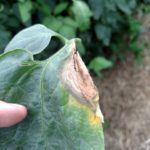
Botrytis gray mold can cause disease on many different host plants, enabling the fungus to easily survive and disperse between crops. Host crops include flowers such as geraniums, vegetables such as green beans and fruit such as strawberries. The disease is favored by relatively cool temperatures and high humidity. We recently observed botrytis gray mold…Read more about Botrytis Gray Mold[Read More]
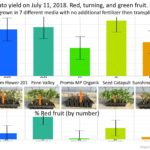
We know from published research that the health and quality of a vegetable transplant affects how it will establish, grow, and yield in the field. Our recent work comparing tomato and cucurbit seedling growth in different organic growing media and with and without added fertilizer has provided some good examples of this. See Vegetable Crop…Read more about Vegetable Transplant Care Translates into Early Yield Differences[Read More]
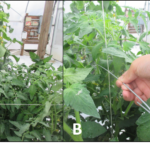
The Florida-weave or sometimes called stake and weave is a commonly used tomato trellis system (Figure 1). It has several benefits and is easy to implement. However, sometimes the plants grow too tall and can hardly be supported by the stakes, or they may be too vigorous and break the strings. In this article, we…Read more about An Alternative Trellis System may Improve Tomato Yield[Read More]

Tomato and Cucumber growers who are interested in grafting tomato and cucumber plants by themselves may find this information helpful. Step-By-Step instruction of how to graft tomato plants is available from Purdue Extension publication Vegetable Grafting: Techniques for Tomato Grafting https://mdc.itap.purdue.edu/item.asp?Item_Number=HO-260-W as well as a Purdue Extension video https://www.youtube.com/watch?v=7Ufx66Isf88 A cucumber grafting instruction was also…Read more about Learn How to Graft Cucumber and Tomato Plants[Read More]

High tunnels, though relatively new, have gained popularity over the past decade among specialty crop growers who want to extend their growing season. However, these environments can make crops vulnerable to the development of soil-borne diseases that reduce yield. This is particularly true for tomatoes, which are the most commonly grown high tunnel crop and…Read more about Dealing with Yield Decline in High Tunnel Tomatoes[Read More]
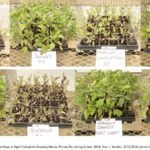
Getting seedlings off to a good start begins with a good growing medium for transplants. Growing media for organic production must meet the guidelines set out by the National Organic Standards Board, including not containing any synthetic substances (unless they have been approved for that use) or any prohibited materials. A number of products meet…Read more about How Do Growing Media for Organic Production Compare?[Read More]
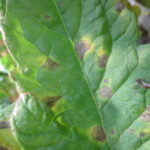
The following two articles describe two vegetable diseases new to Indiana that were recorded this past season. While neither of the disease reports are from severe outbreaks, it might be a good idea to become familiar with what may become a new disease situation. Target spot of tomato was identified from a tomato plant growing in…Read more about New Disease Report – Target Spot of Tomato[Read More]