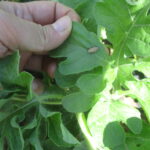
What’s this insect? Is it a friend or foe? This is a lady beetle larvae. Although it may look dangerous, they are actually beneficial insects. It feeds on aphids. learn more about beneficial insects for aphids control, please check this recent article Organic Aphid Control Update.
Vegetable Crops - General
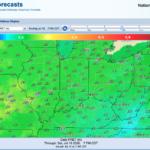
The past 30 days have been met with warmer than normal temperatures in the northern counties and drier than normal conditions throughout most of the state (Figures 1 and 2). This warm and dry environment is conducive to developing drought – particularly with the increased evapotranspiration rates. While climate outlooks are calling for increased confidence…Read more about Reference Evapotranspiration Forecasts across Indiana[Read More]
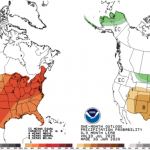
The roller coaster ride of Indiana weather continues. Things were drying out across the state with signs of browning lawns, rolling vegetation leaves, and lowering pond and stream levels. Then the rains came. Most of the state received between 2 and 3 inches of precipitation from June 20 through 29th – with wetter areas to…Read more about Outlooks Showing Confidence for Below-normal Precipitation[Read More]
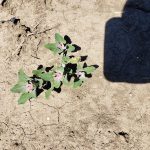
Scientific name: Chenopodium album Common lambsquarters is originally from Eurasia. It is an aggressive weed, adapted to grow vigorously in many different climates and soils, and has been able to establish worldwide. In North America it was once grown as a vegetable crop. In Asia and Africa, it is still cultivated to use as a…Read more about Common Lambsquarters[Read More]
Hoosier Food Market, an online sales platform where farmers can sell directly to consumers with no overhead costs. COVID-19 has changed the way we do a lot of things. Purdue Agriculture recognized that many farmers markets may not be operating at the same capacity, and restaurants may not be purchasing the same amount of product…Read more about Online Sales Platform – Hoosier Food Market[Read More]

WHAT: An Indiana Pesticide Clean Sweep Project designed to collect and dispose of suspended, canceled, banned, unusable, opened, unopened or just unwanted pesticides (weed killers, insecticides, rodenticides, fungicides, miticides, etc.) is being sponsored by the Office of Indiana State Chemist (OISC). This disposal service is free of charge up to 250 pounds per participant. Over…Read more about Clean Sweep 2020 – Free Opportunity to Dispose Unwanted Pesticides[Read More]
Dicamba has been in the headlines the last two weeks. In case you’ve missed it, here are the highlights: On June 3 the United States Court of Appeals for the Ninth Circuit ruled against the Environmental Protection Agency and its 2018 registration of over-the-top dicamba products Xtend, Engenia, and FeXapan and vacated their registrations. The…Read more about Dicamba Herbicide Updates and New Resources[Read More]
The Purdue Extension Entomology Vegetable Team has a new website available for you to stay in touch and access resources for pest management in your vegetables, wherever and however you grow them! It is also the place to stay updated with the CEW trapping for 2020 by following the page to this location. Check it…Read more about Updated Resources to Check Out![Read More]
A few weeks ago, the Great Lakes Vegetable Producer’s Network discussed hoophouse nutrient management. Judson Reid from Cornell University and David Van Eeckhout from The Good Acre, St. Paul, MN, were the invited speakers. They shared their insights. I find them very helpful, so I want to pass my notes on to Indiana hoophouse growers….Read more about Hoophouse Nutrient Management — Notes from Great Lakes Vegetable Producer’s Network Weekly Roundtable Discussion[Read More]
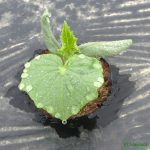
Question: Why are the water droplets arranged so evenly around the edge of this cucurbit leaf? Answer: The water droplets came out of pores that are at the edge of the leaf where a vein ends. The pores are called hydathodes. The droplets form through the process of guttation. Guttation is when the water pressure…Read more about Answer to Question from Last Issue (6-3-2020)[Read More]